Tag Archives: #history

What Local History Are You Missing Out On?……… A Medieval Castle Perhaps?

How often do you drive or walk past the history on your own doorstep without so much as a second glance?

I’ll confess …. maybe not quite daily but it’s a regular occurrence and it transpires I’m not the only one in the house who does so.

Less than 10 miles from our house there’s a 15th Century castle. A national tourist attraction. Do you know how many times I’ve visited it? Until today, once! (Hangs her head in shame.)

So, on a dreich Sunday afternoon, Girl Child, the Big Green Gummi Bear and I decided the time had come to visit the castle. (About 15 years ago I had taken both Boy Child and Girl Child there but neither of them remembers it!)

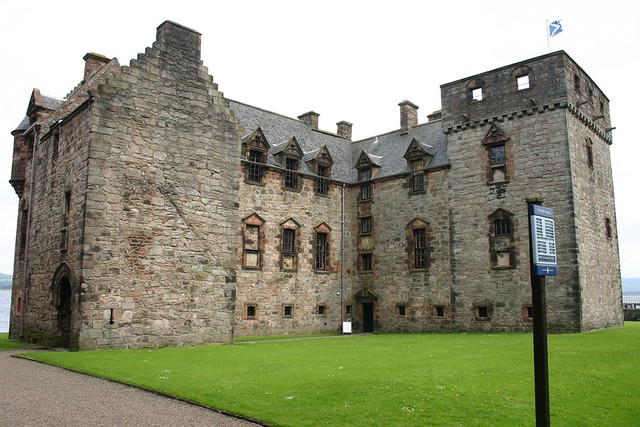
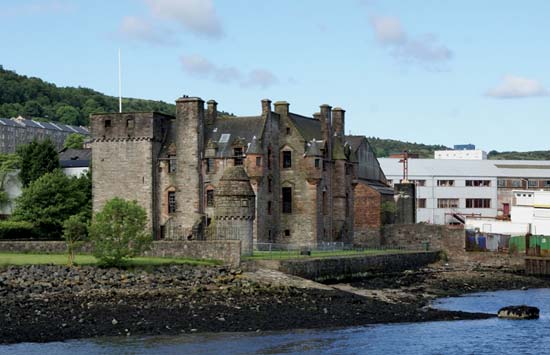
Newark Castle sits on the banks of the River Clyde near Port Glasgow.

It was built circa 1480 by George Maxwell and is one of the finest late-medieval buildings in Scotland. Both the Gatehouse and Towerhouse date back to that era as does the Doocot in the grounds. The rest of the castle was remodelled in 1590 by Patrick Maxwell, transforming the cramped medieval castle into an elegant Renaissance mansion. Both the north wing and east wing were remodelled and the grounds transformed.

Today, the castle stands pretty much as it did back then.

Newark Castle


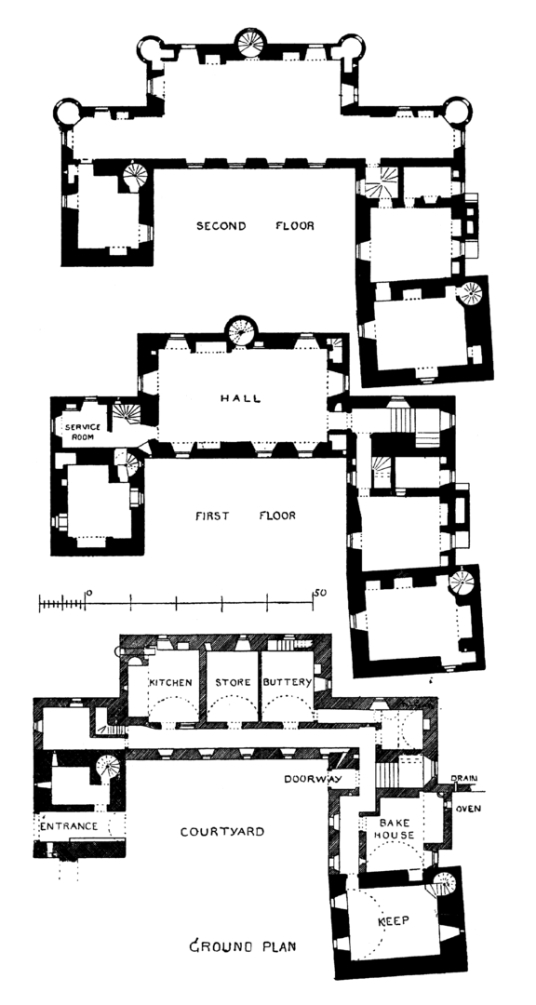
Newark Castle is a veritable labyrinth spread over three levels. It also boasts one of only three surviving anti-clockwise staircases to be found in Scotland’s castles.   You enter via the 15th century Gatehouse which leads through to the cellars, kitchen, bakehouse and the Towerhouse cellar. There are numerous staircases giving access to the upper floors. From the Towerhouse cellar you can climb up to the roof lookout point. It’s quite a twisty climb! From the wine cellar, there is a staircase leading straight up to the great hall. A further staircase leads from the kitchen to the great hall.

The upper level has a long gallery running the length of the north wing and this is where the laird’s private chambers and, including the rooms in the east wing, the family bed chambers and guest rooms would have been. One bedroom features original wood panelling and a rare example of a wall bed.

The windows in the east wing afford a view over the grounds and the Doocot (dovecot) whish has survived from the 1480’s. Doocots were popular in the 15th century as the pigeons (doos/doves) provided a source of fresh meat during the long winter months.

Newark Castle floor plan

This slideshow requires JavaScript.


This slideshow requires JavaScript.

This slideshow requires JavaScript.


The building is well worth a visit.

Equally intriguing is the history of the owners through the ages.

The land that the castle stands  on belonged originally to the Denniston family but became part of the Maxwell estate in 1402 when Elizabeth Denniston married Sir Robert Maxwell of Calderwood.

At that time, Newark was part of the barony of Finlaystone, an estate some five miles to the east. ( http://www.finlaystone.co.uk/ ) If the Denniston family had a castle it is highly likely that it formed part of the Finlaystone estate.

In 1478 George Maxwell inherited the barony of Finlaystone and within a few years was being styled as “George Maxwell of Newark and Finlaystone”. This all ties in nicely with the construction dates for the original castle buildings. It is also documented that in 1495 James IV visited Newark Castle whilst on a mission to quash disturbances in the Western Isles. (It’s likely that the laird would have had to surrender his sumptuous bed chamber in the Towerhouse to the king during his stay.)

Over time the Maxwell family became a powerful and influential family in the area. Historically, the most notable member of the family was Sir Patrick Maxwell, who was the laird of Newark Castle circa 1580. Initially, he was held up as a pillar of society, well-educated and a justice of the peace as well as being the architect behind the extensive remodelling of Newark Castle in 1590. He enjoyed the patronage of James VI. However, there were two sides to Sir Patrick. He was a wife beater, a child abuser and a murderer. He reportedly murdered two members of the Montgomerie family from Skelmorlie some twelve miles to the west of the castle. Sir Patrick also quarrelled with his son, Patrick, and was implicated in his untimely death. Undoubtedly his wife, Lady Margaret Crawford, suffered worst at his hand. She was married to him for 44 years and bore him 16 children! After years of abuse and ill-treatment she finally escaped from his clutches in 1632 and fled across the River Clyde to Dumbarton. Sir Patrick never answered to the charges raised against him as by that time he was too ill to travel to Edinburgh to face trial and it’s assumed he died shortly thereafter.

New-port Glasgow (modern day Port Glasgow) became a bustling trading post during the 1600’s. The castle’s laird, George Maxwell soon became involved in this merchant trade.

When the last Maxwell laird died in 1694, Newark Castle and its grounds were sold to another influential businessman, William Cochrane of Kilmarnock.

The 1700’s saw trade in the area continue to flourish but sadly the castle began to decline and it changed hands several times. The Cochrane’s sold it to the Hamilton family who in turn sold it in the 1820’s to a London banker, Robert Farquar. In 1825, Robert Farquar’s daughter married Sir Michael Shaw-Stewart, another well known local family from Ardgowan estate in Inverkip some eight miles west ( http://www.ardgowan.co.uk/ ) Newark Castle remained under the care of the Shaw-Stewart family until 1909 when it was entrusted to the State. Today it is curated by Historic Scotland.

During the 18th and 19th centuries the castle was leased to various tenants. The grounds too were leased out to local market gardeners. One tenant was John Orr, a ropemaker with a rather unusual side-line business. He traded in wild animals (panthers, leopards, bears etc) purchased from passing ships that arrived into the port. It is presumed that until he found a buyer for the creatures that they were kept in the castle’s cellars, giving rise to rumours that the castle was haunted as the locals reported strange howling during the night.

Newark Castle is a historical gem that in more recent times has been hidden, literally, by the Clyde’s shipbuilding industry. For much of the 20th Century it was surrounded to the west, east and south by Ferguson’s and Lamont’s Shipbuilders. As the shipbuilding industry fell into decline in the 1980’s Lamont’s closed its doors and was subsequently demolished, revealing the castle’s southern and eastern exposures to the world once more.

Today, but for how much longer, Ferguson’s still remains to the west of Newark Castle, a modern-day industrial neighbour to this discrete medieval gem.

castle and yard


If you want to discover more about Newark Castle check out the site below:

https://www.historicenvironment.scot/visit-a-place/places/newark-castle/

(some images sourced via Google – credits to the owners)


19 Crimes…. and a glass or two of wine

I’ve been asked on numerous occasions where I find my story ideas and what inspires my blog posts. I always answer that it’s a little bit of everything- song lyrics, a place I’ve visited, an event, a name, etc….

Well, this week’s blog is inspired by the glass of wine I enjoyed with dinner on Sunday. Well, the label on the bottle to be more precise. (No, I didn’t drink the whole bottle before you ask!)

For weeks while I’ve been doing the weekly supermarket shop a particular bottle of Australian Chardonnay has been catching my eye. However, at full price, it was a little over my preferred budget. This week it was on special. Still a little over my price but I thought “What the hell!” and picked up two bottles. (I’m a bit weird that way as I’ll always buy bottles of wine in pairs.)

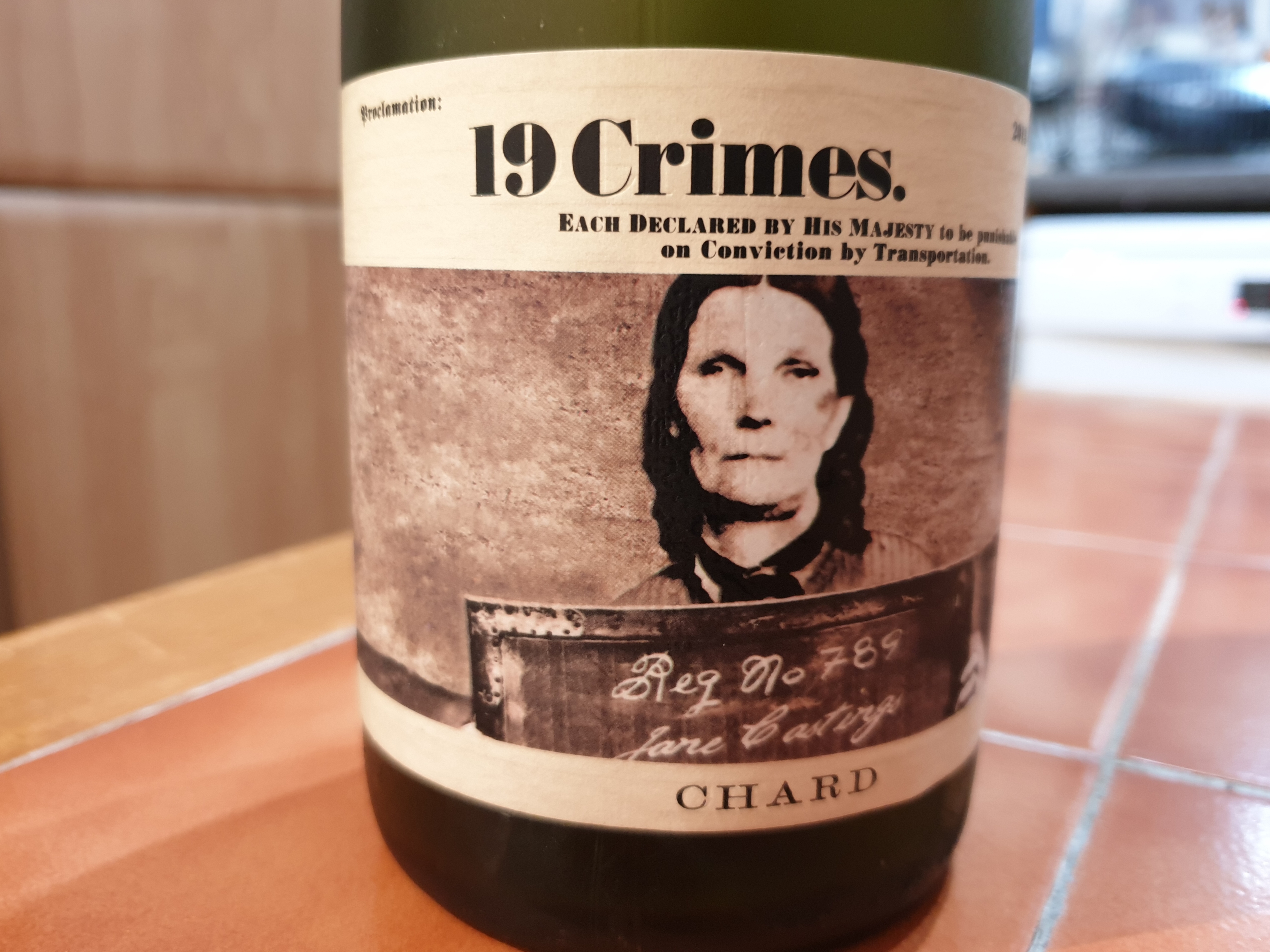
What had attracted my attention? The label on the front of the bottle and the name 19 Crimes.

20190324_212125.jpg


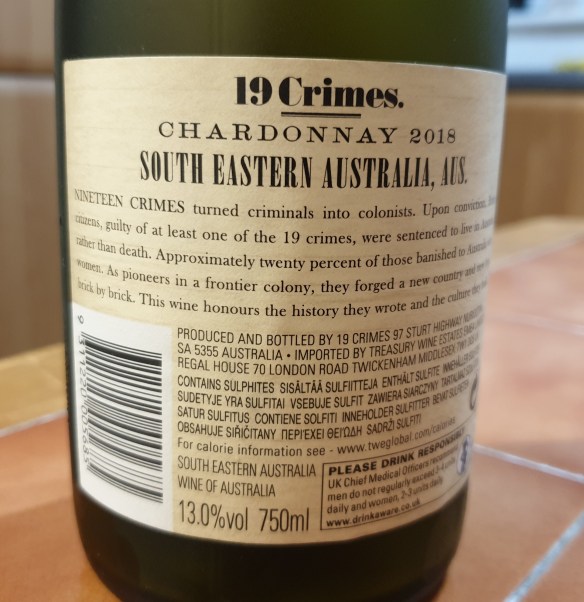
Over dinner on Sunday,  initially conversation wasn’t really holding my attention  (sorry, guys) and I turned the wine bottle, that was sitting in front of me on the table, around to read the label on the reverse.

20190324_212214 (1).jpg


Intriguing…..what were the 19 Crimes?

This sparked an entirely different dinner conversation after a little emergency “Googling.”

So, were there really 19 Crimes that led to convicts being transported to Australia?

Yes! And between 1768 and 1868  thousands were in fact transported to Australian.

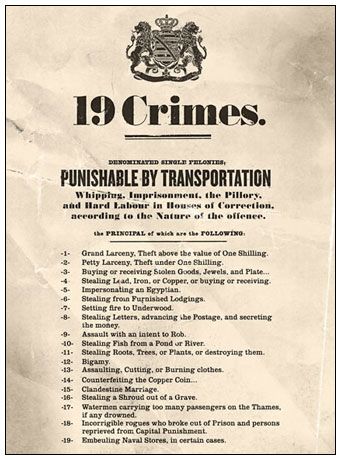
The 19 Crimes were:

54cecf384be208e2a1469c09b5930319


Once dinner was over and a second glass of wine had been poured, I sat down at my desk to do a little more digging into this subject.

Don’t panic! You’re not about to get a lengthy history lesson…… only a short one.

The first eleven convict ships set sail from England in 1787. They arrived at Botany Bay on 20 January 1788 where the first European community on the continent was established….and so Sydney, NSW was born.

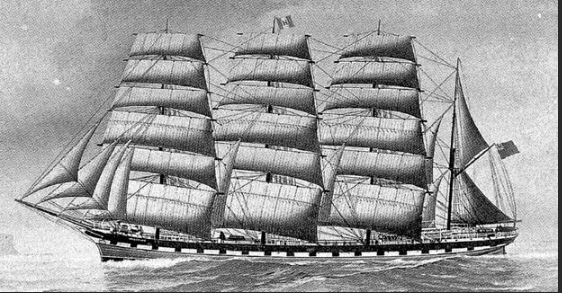
the hougoumont

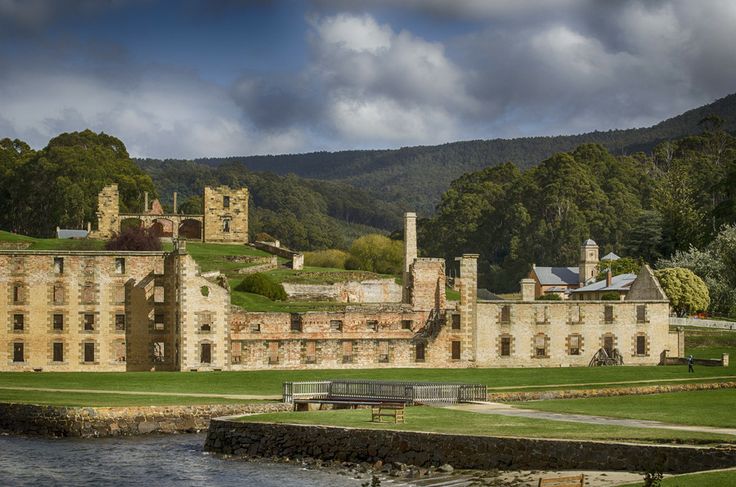
Over the next forty some years several other penal colonies were established as more convicts arrived. The most famous of these was Port Arthur in Van Diemen’s Land (Tasmania) in 1803.

Port Arthur Penal Colony Tasmania

Penal transportation peaked in the 1830’s. However opposition to this practice grew throughout the 1840’s. Transportation to Van Diemen’s Land ended in 1853 when the last convict ship, the St Vincent, arrived from England.

Small numbers continued to be transported to a colony in Western Australia but on 10 January 1868 the last convict ship, The Hougoumont, docked. (pictured above)

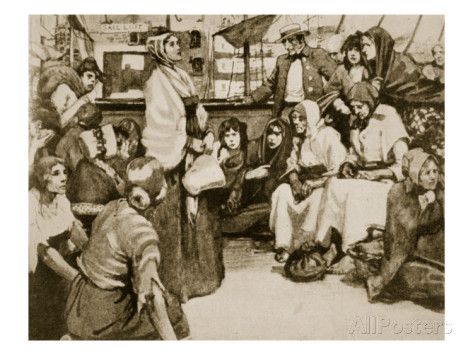
In total 806 ships had transported approximately 164 000 convicts to the continent over a period of eighty years. Around 24 000 of these were women, some of whom had deliberately committed petty crimes in order to be transported to join their husbands. Records show that 70% of those transported were from England and Wales, 24% from Ireland, 5% from Scotland and the remaining 1% a mix of convicts from the British colonies in India, Canada, New Zealand, Hong Kong and the Caribbean.

8490a76a6df4c8c9b8d8fff538f1b44e

Some of those transported went to lead successful new lives in Australia. Some notable convicts were:

James Blackburn, famous for his contribution to Australian architecture and civil engineering

Daniel Connor who was sentenced to seven years transportation for sheep stealing went on to become one of the largest landowners in central Perth by the 1890’s.

Francis Greenway became a famous Australian architect.

Laurence Hynes Halloran founded the Sydney Grammar School.

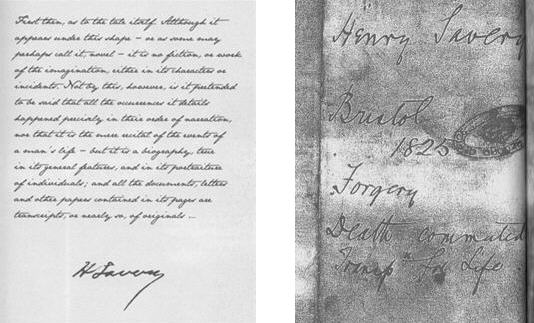
Henry Savery is noted as being Australia’s first novelist and author of Quintus Servinton


12610102savery7

One female convict stands out. Mary Wade was the youngest convict transported to Australia aged only 11 years old. She went on to have 21 children and at the time of her death had over 300 living descendants!


This slideshow requires JavaScript.

Twenty one children!!!!

That thought calls for another glass of wine! 😉


some images sourced via Google – credits to the owners