
Sometimes in life the age of something or the history associated with it totally amazes me.
A couple of weeks ago I spent two days in Nottingham and finally able to realise a dream. At the fourth attempt, I visited Nottingham Castle. (Every other visit I just haven’t been able to co-ordinate the time with its opening hours.)
Yes, everyone around the world most likely associates Nottingham and its castle with Robin Hood and the Sheriff of Nottingham but there is a whole load more to it than that. We could debate all day on whether Robin Hood really existed but let’s not go there. I’d like to think he did.
Nottingham Castle and the rock it sits on share 1000 years of history!
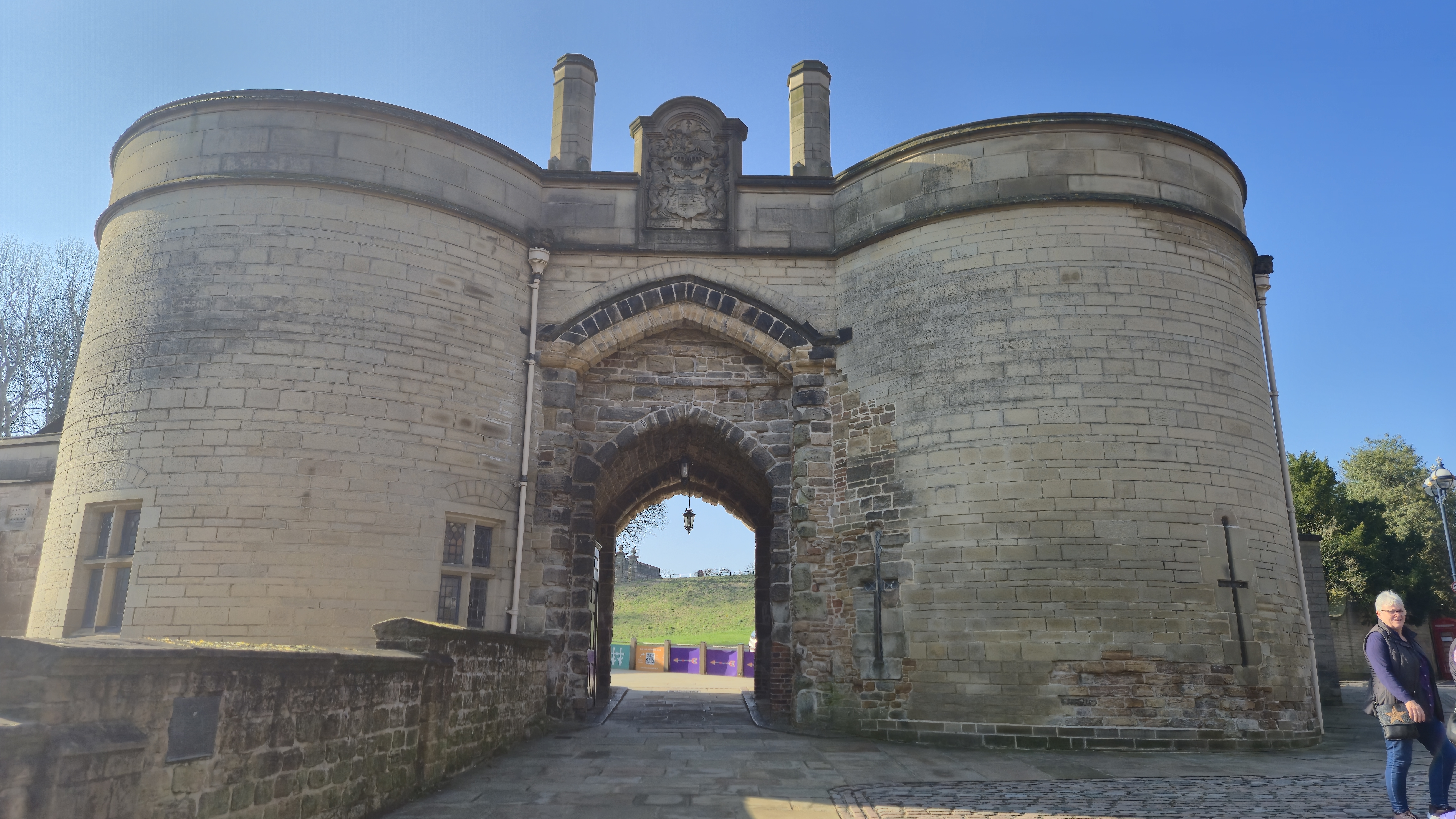
It has an incredible history (you can read about it at your leisure) but the small part of that history that blew me away was my visit to Mortimer’s Hole.
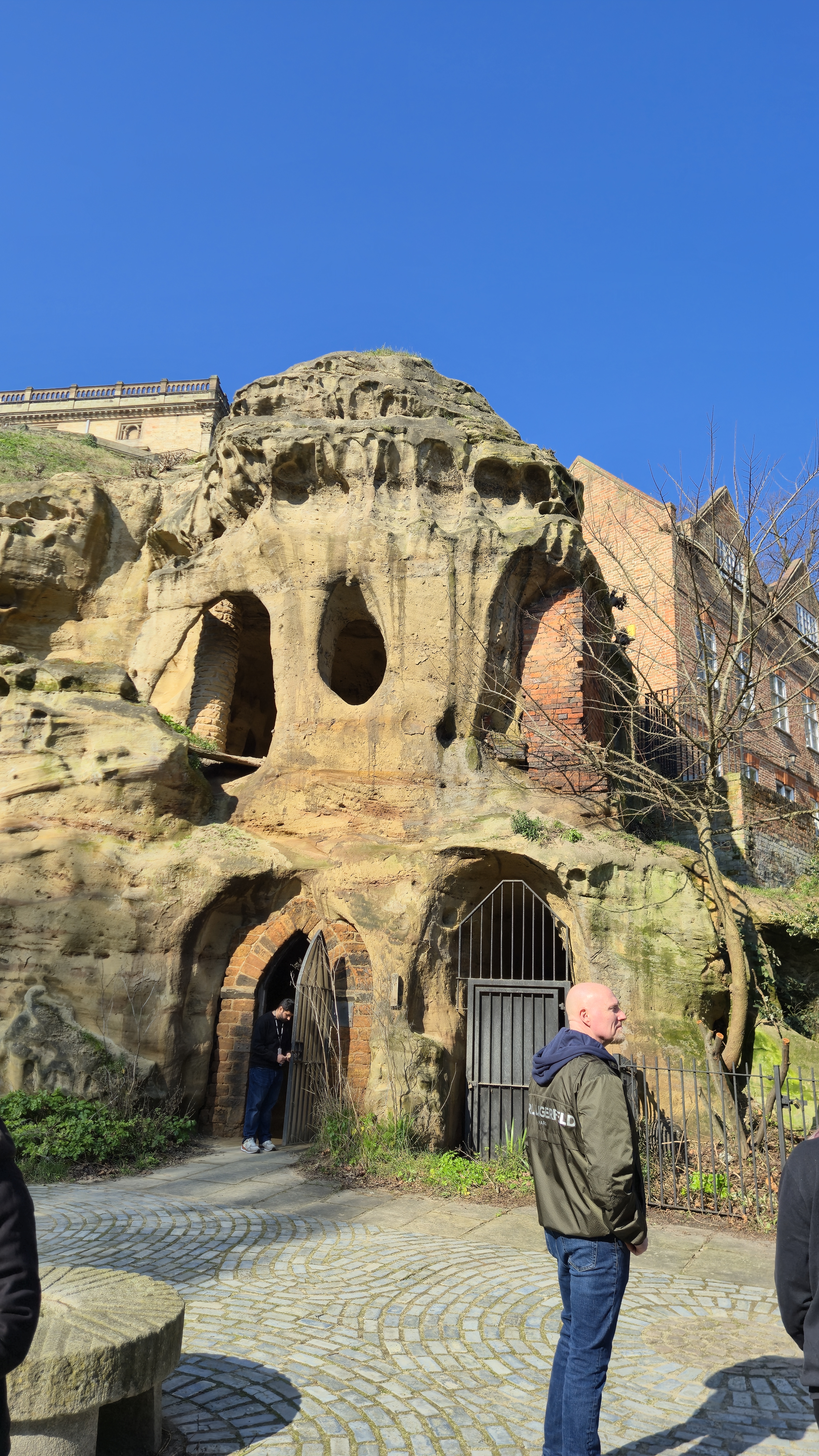
For those who don’t know, the city of Nottingham boasts the highest number of caves of any city in Europe. There are over 900 registered caves beneath it with suspicions of up to 2000 more! Mortimer’s Hole, beneath the castle, is one of the most famous.
When I arrived at the castle, as I was purchasing my entry ticket, I was asked if I was interested in taking the cave tour that was starting in about 20 minutes. It would last about an hour. The answer was a resounding “Yes, please.”
I’ll spare you the full 1000 years of history of the tunnel and caves that are known as Mortimer’s Hole and focus on the first half of the 14th century when it earned its name.
In 1307, Edward II was crowned king following the death of his father, Edward I. The new king needed a wife. England also needed to improve relations with France so Edward II killed two birds with one stone and married the French King Philip IV’s daughter, Isabella of France, also known to history as “the She Wolf of France”. Edward II had a troubled reign, partly due to his close relationship with Piers Gaveston, a member of the royal household. Suffice to say, although she bore him several children, Edward II was a poor husband to Isabella. There was significant unrest in England and in 1325, Isabella returned to France, taking her son and heir to the throne, Edward III with her. While in France, she met Roger de Mortimer, an English nobleman who was vehemently opposed to the king’s relationship with Piers Gaveston. The queen and de Mortimer became lovers. They also hatched a plot to return to England with a small army, overthrow the king and name the young Edward as king. (Edward III) Mortimer and Isabella’s invasion was a success (I’ve greatly simplified this tale and to the historians among you, I humbly apologise for this.)
Long bloody story short, Edward II was captured and imprisoned, eventually abdicating in favour of his 12-year-old son. As the boy was too young to rule, Queen Isabella set herself up to reign as Regent with Roger de Mortimer by her side.
This wasn’t necessarily a popular move among the people.
In 1330, young Edward III, now a married man with a family and barely 18-years-old, decided enough was enough and decided to reclaim his throne.
Both Queen Isabella and Roger de Mortimer, along with Parliament, were at Nottingham Castle on 19th October 1330 when young Edward III “attacked”. In actual fact, history records that Edward III’s men were granted entrance to the castle via the passage through the Castle Rock. Someone on the inside unlocked the doors and unimpeded, they were allowed to gain access to Mortimer’s chambers.
Mortimer was seized, bound and gagged then dragged from his chambers, through the castle and down through the tunnel before being taken to the Tower of London. (He was tried and then hanged.)
Edward III was a good king and went on to rule over England for 50 years.
But what became of his mother, Queen Isabella? Edward III showed leniency towards her. Well, she was his mother after all. She was exiled initially to Windsor Castle and then moved to Castle Risking in Norfolk where she died in 1358.
The cave/tunnel became known as Mortimer’s Hole from that point on.
As I stood in the tunnel listening to the tour guide, Jane, telling the group of us all about the history, I was totally blown away to realise that I was standing where Richard I, the Lionheart’s men would have walked. I was walking down the same passageway that Roger de Mortimer was bundled down. How many famous historical feet had walked the same path? It truly was a moment that brought me up short.
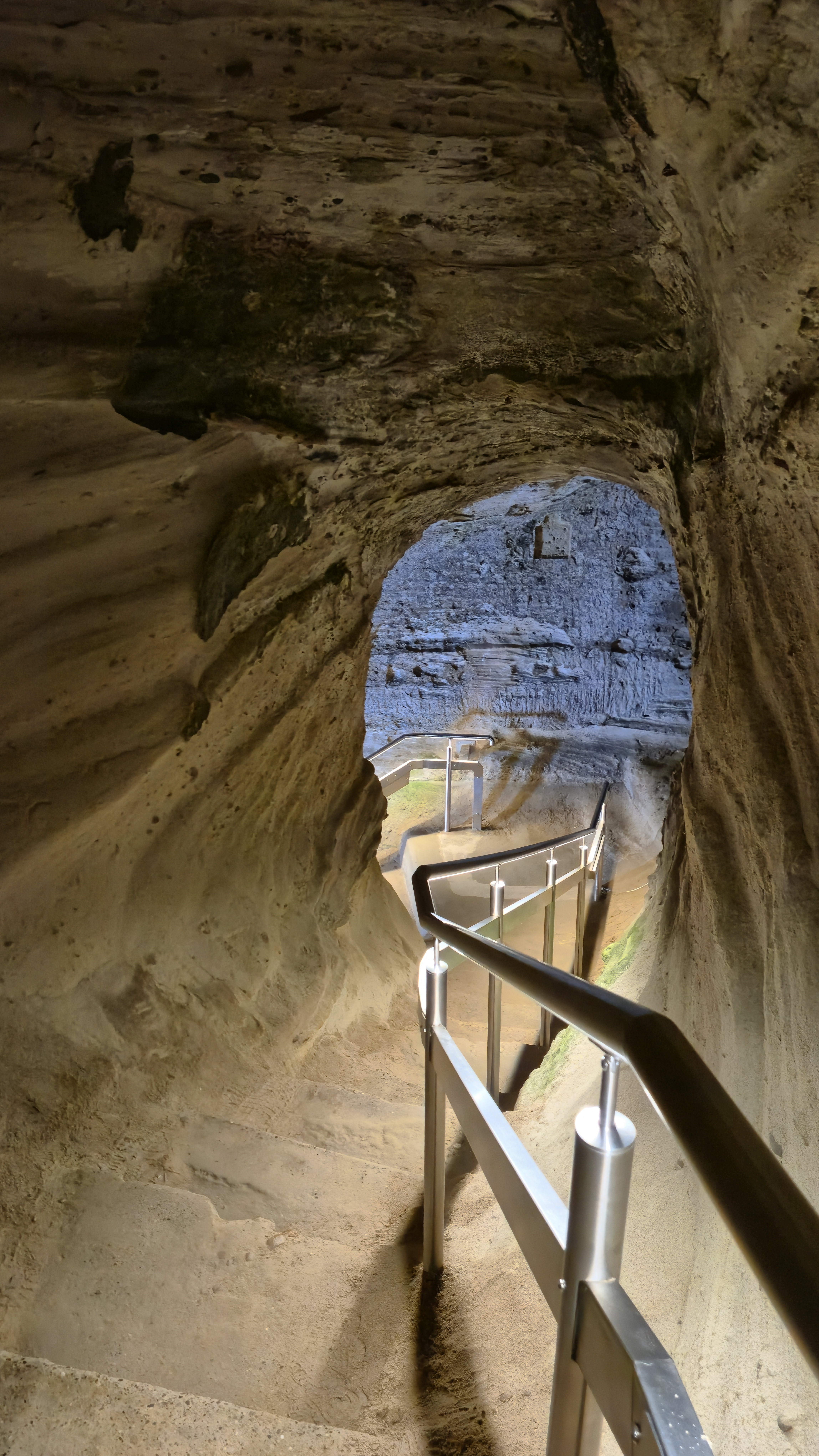
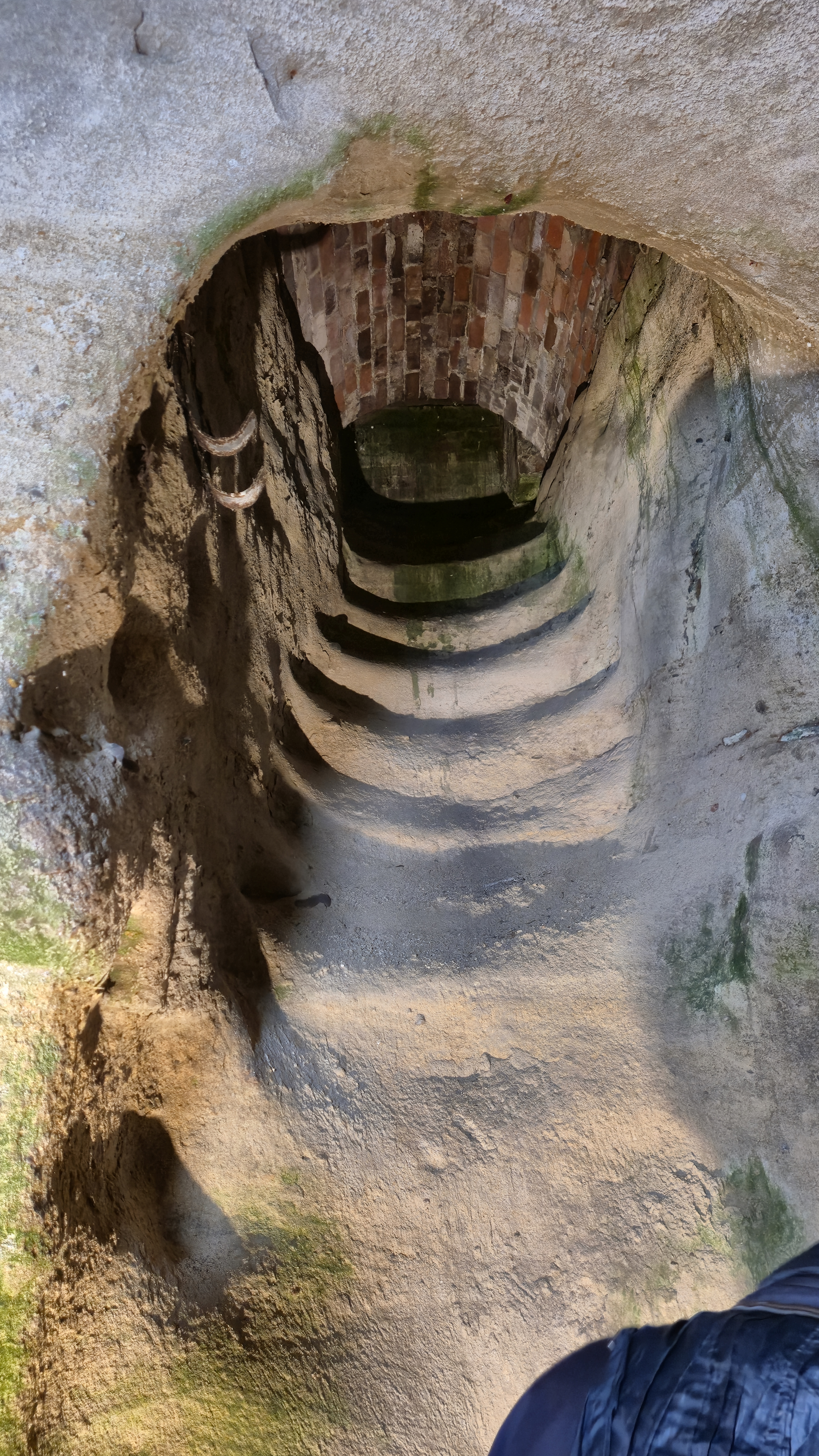
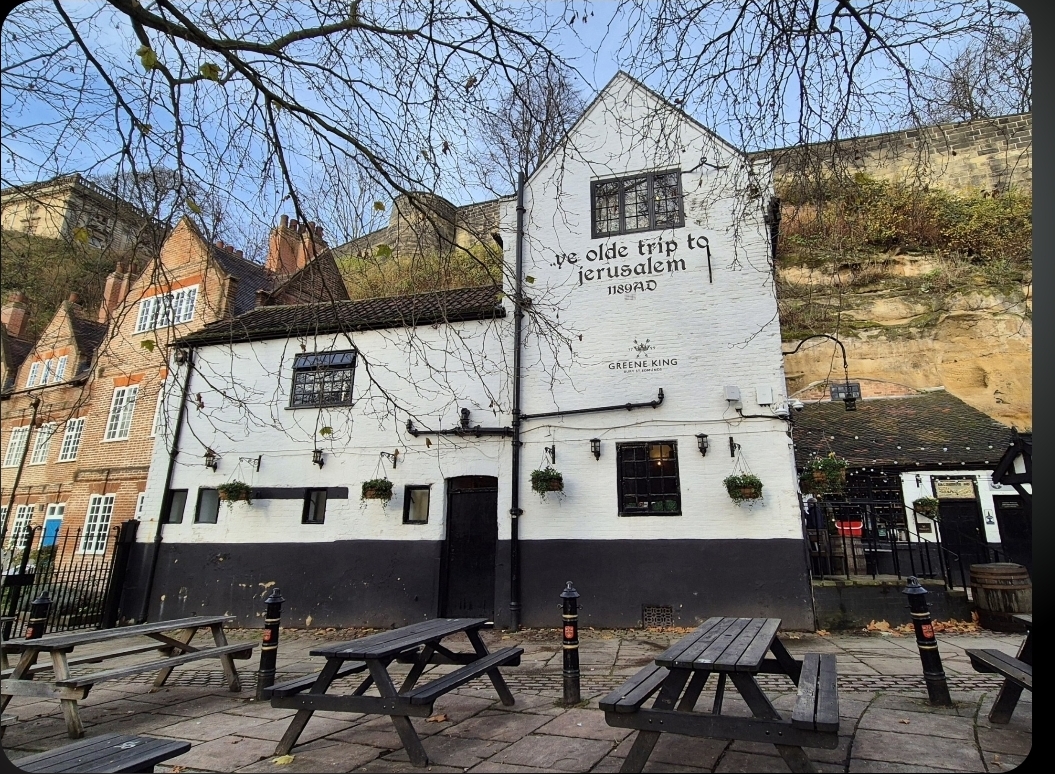
The tour exited the cave/tunnel into an open area to the south of Castle Rock known as Old Brewhouse Yard and then out into the courtyard of Ye Olde Trip To Jerusalem Inn that dates back to 1189AD.
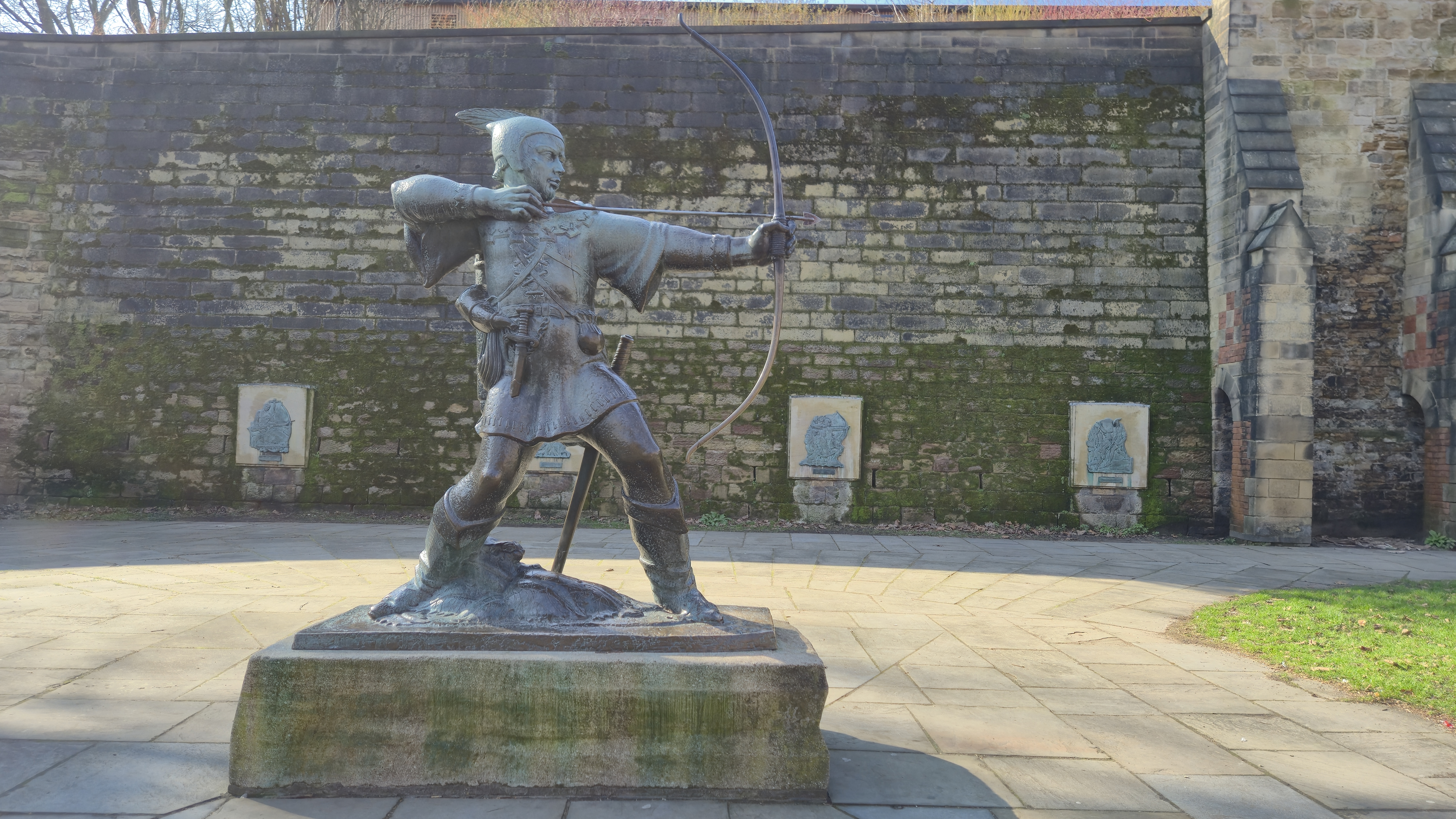
As I walked away, I glanced down the hill towards Robin Hood’s statue and smiled. I’d like to think that he too had visited the castle via Mortimer’s Hole.
Huge thanks to Jane, the tour guide from Nottingham Castle for bringing the cave tour to life so passionately and knowledgeably.


 Coral McCallum