
What to do on a sunny Sunday afternoon in California?
At a bit of a loose end, I got an Uber out to the Getty Villa in Pacific Palisades.
No, this isn’t some fancy Hollywood home. This villa is a Roman villa…well, one built in the 1970s to house J Paul Getty’s collection of Greek. Etruscan and Roman antiquities.
You could argue that there are two distinct reasons to visit the Getty Villa – either to see the contents or to see the villa itself. I was curious to see both.
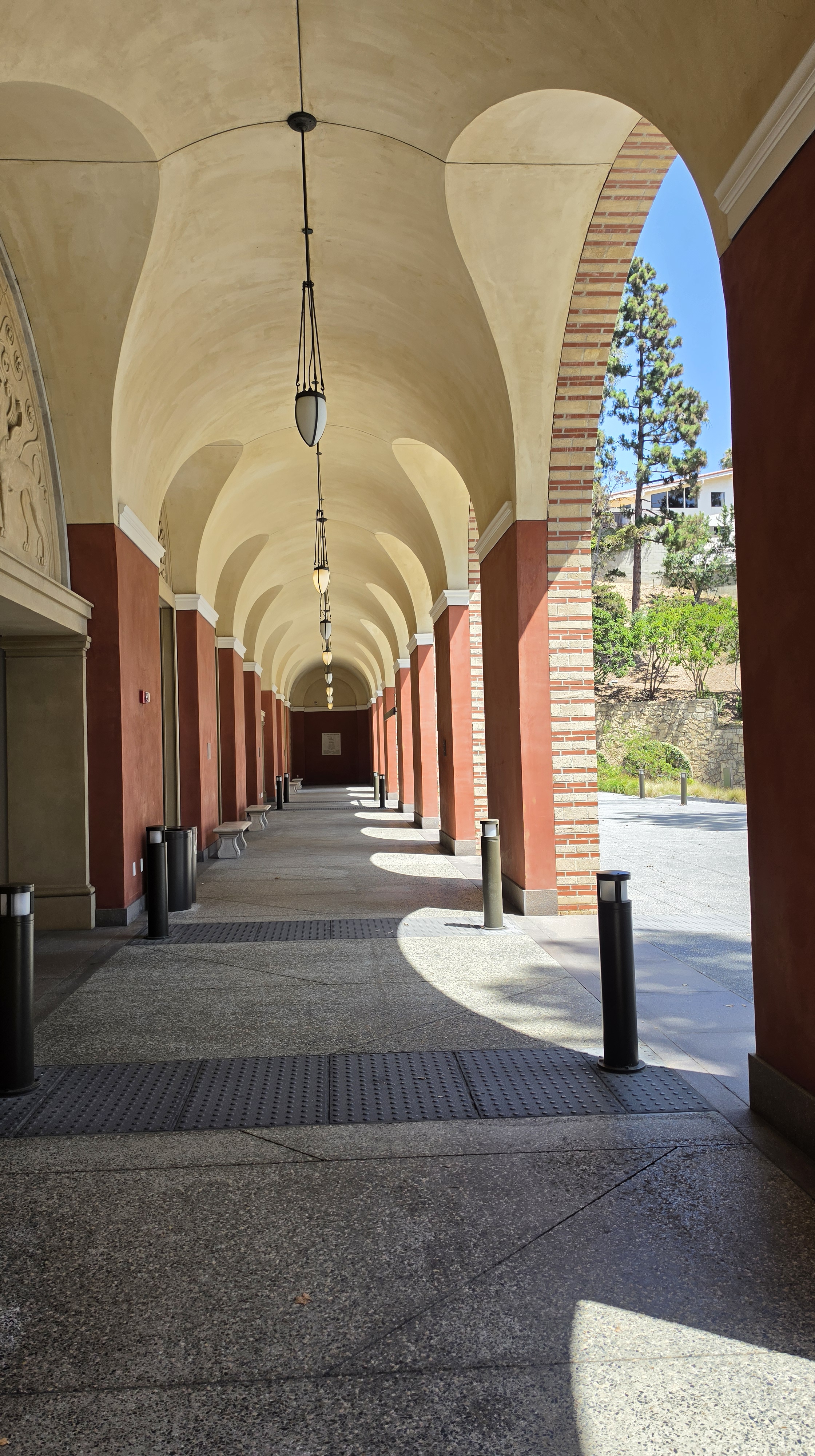
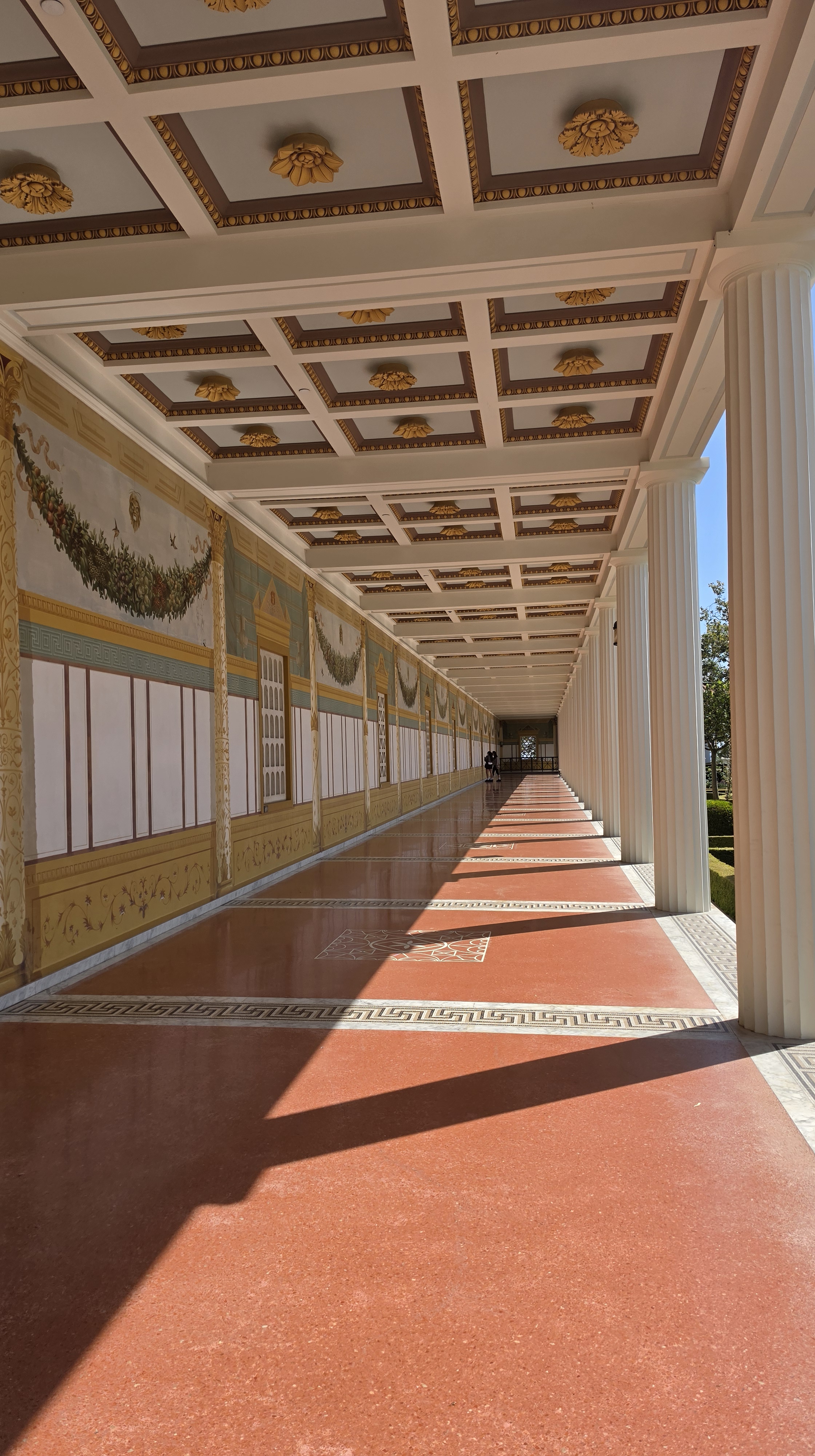
My Uber driver dropped me off at the top of the driveway in front of a beautiful colonnade, a hint of the architecture to come. I followed the signs and eventually came out at the top of an amphitheatre. The outdoor theatre faced the entrance to the villa itself. Walking down its steep steps felt like making a dramatic entrance!
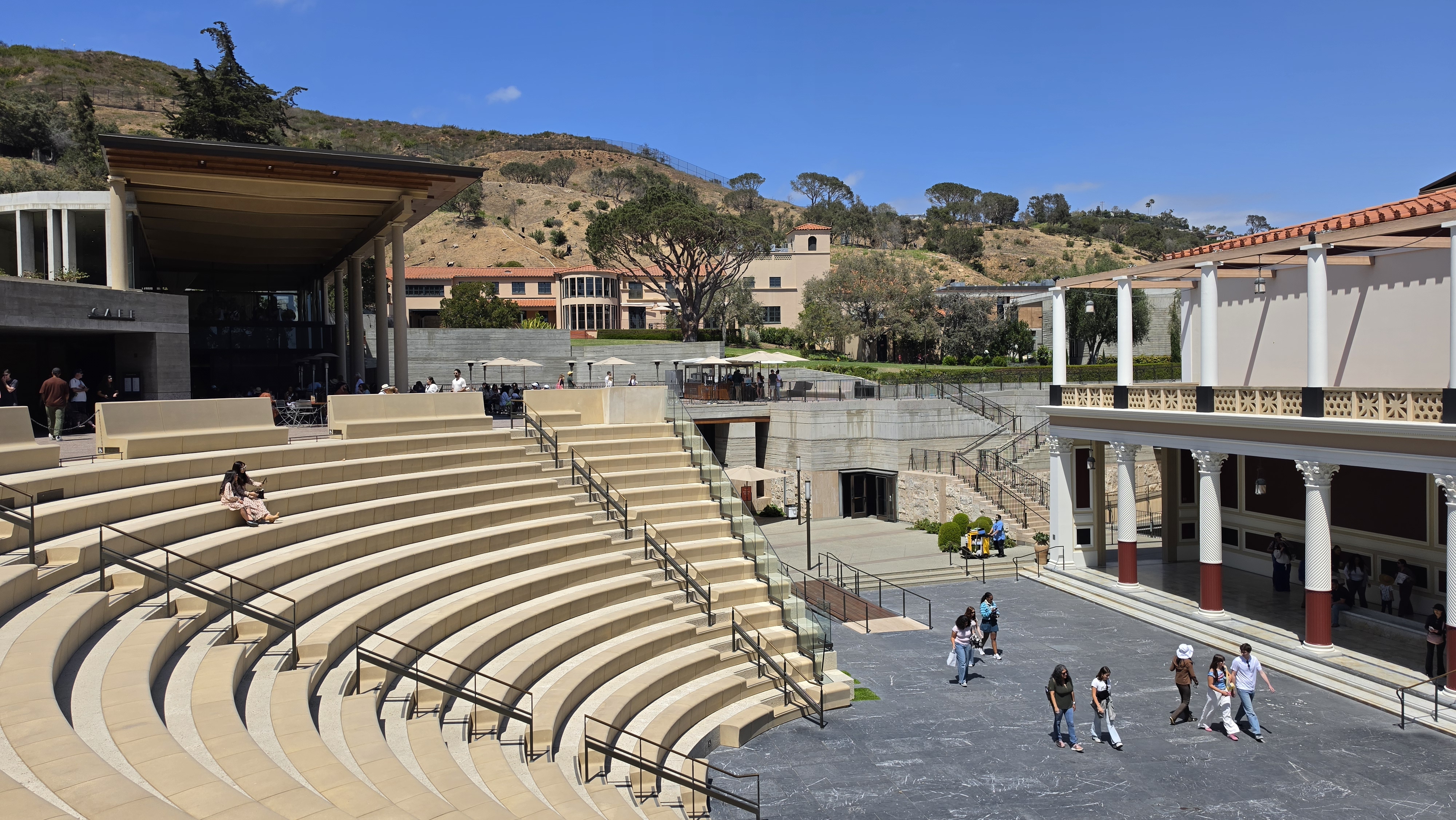
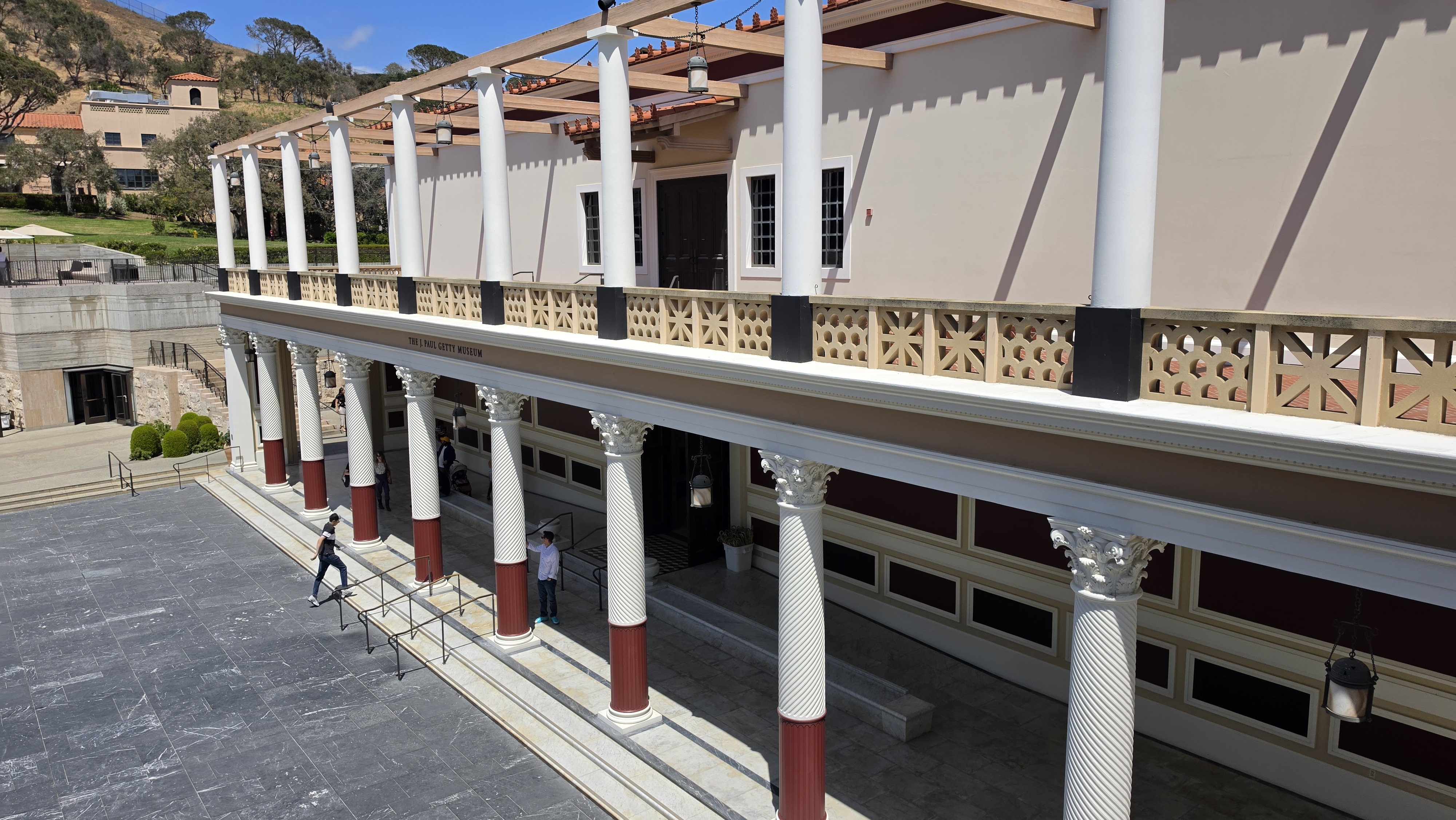
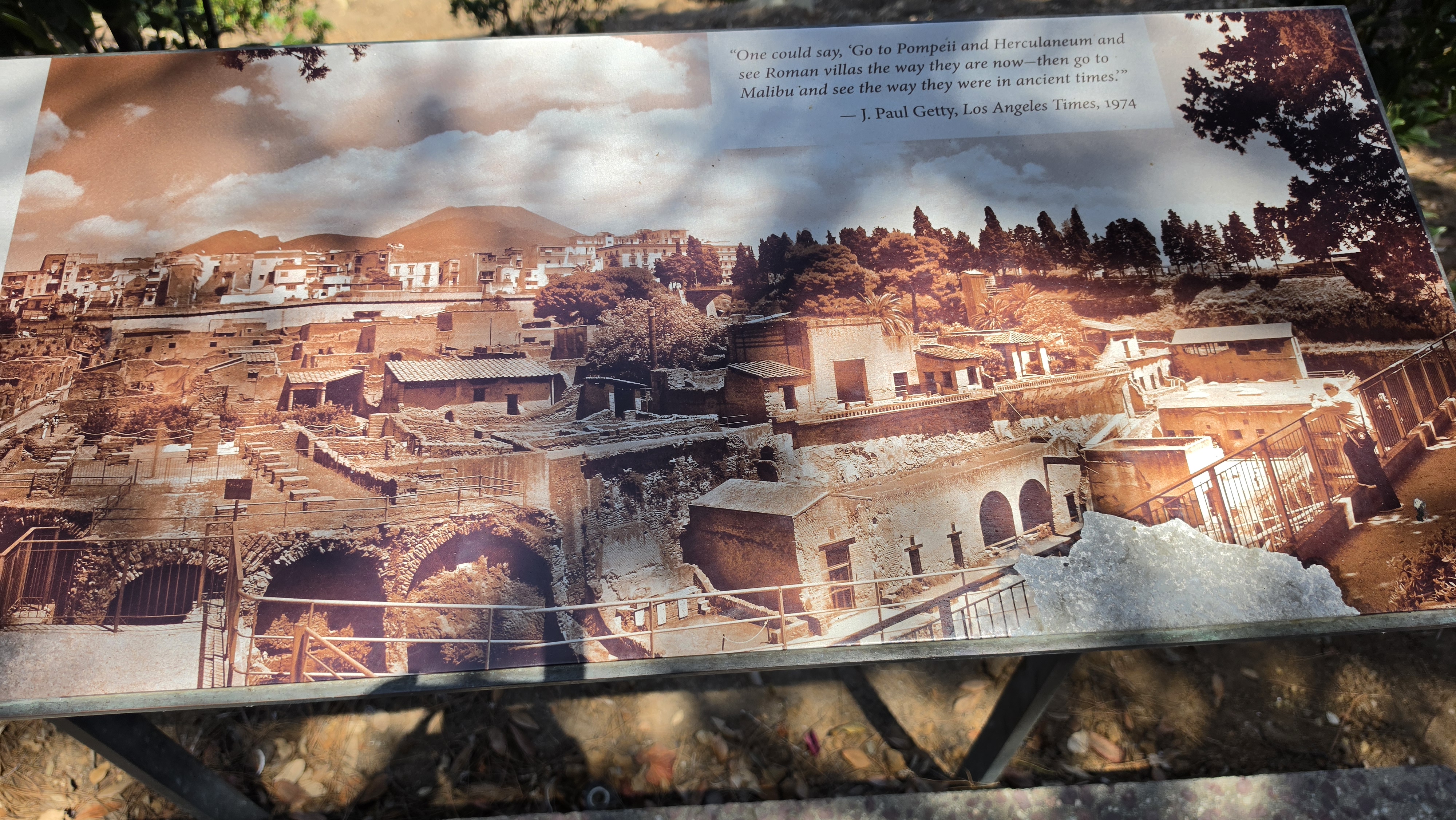
The Getty Villa is a recreation of the Villa dei Papiri that was buried in Herculaneum, Italy when Mt Vesuvius erupted in 79AD. While not identical to the original, the Getty Villa is the epitome of a Roman villa and has been built to the same scale.
You enter the two-storey villa via a vestibule then step into the impressive atrium, the heart of every Roman home. The coloured marble floor is laid out in a geometric pattern that is a replica of the floor found in the House of the Faun in Pompeii. The villa’s stunning inner peristyle and gardens were just visible beyond the atrium.
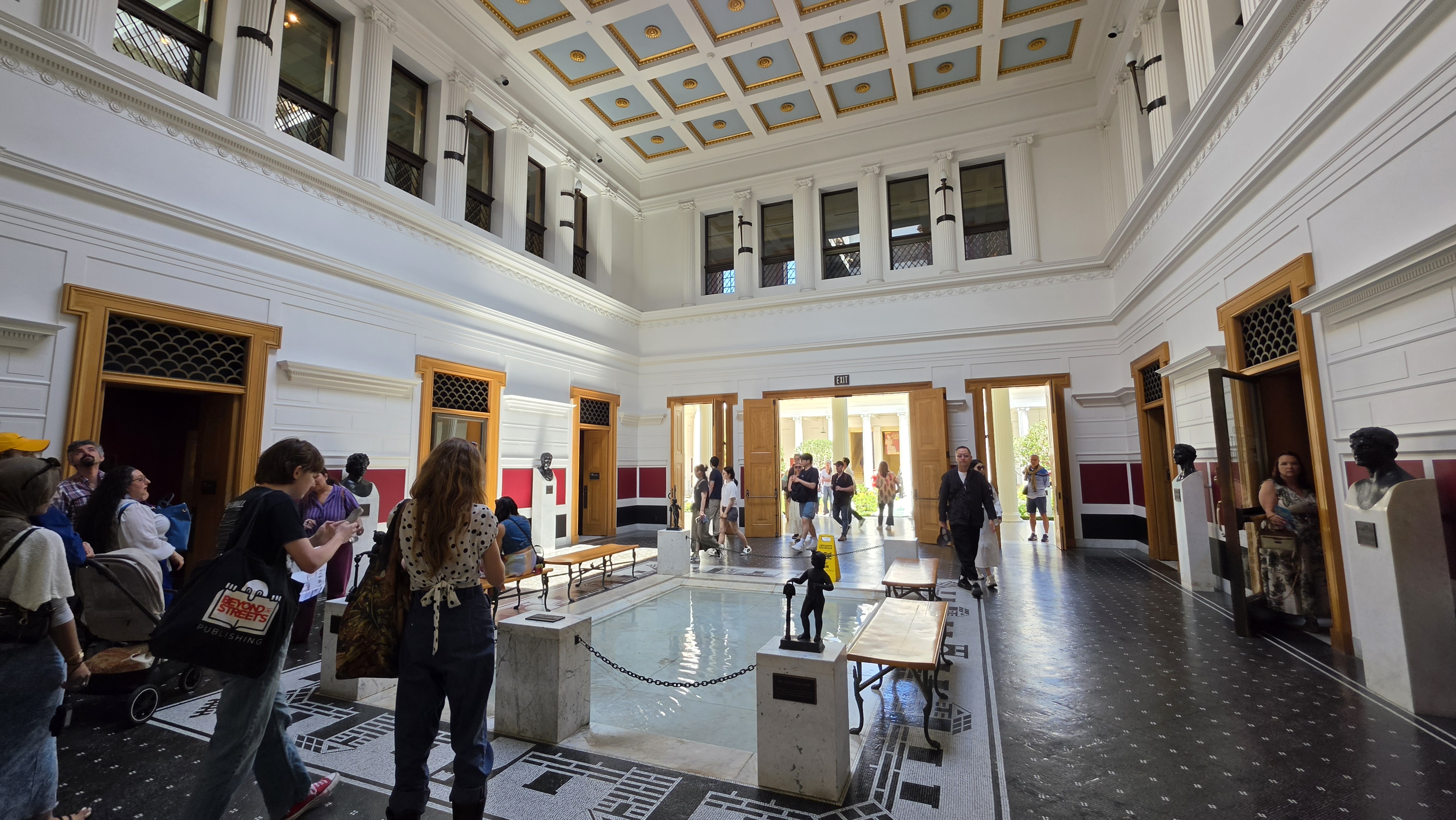
For the next hour or two I explored every inch of the villa and found the most incredible collection of artifacts that I think I have ever seen.
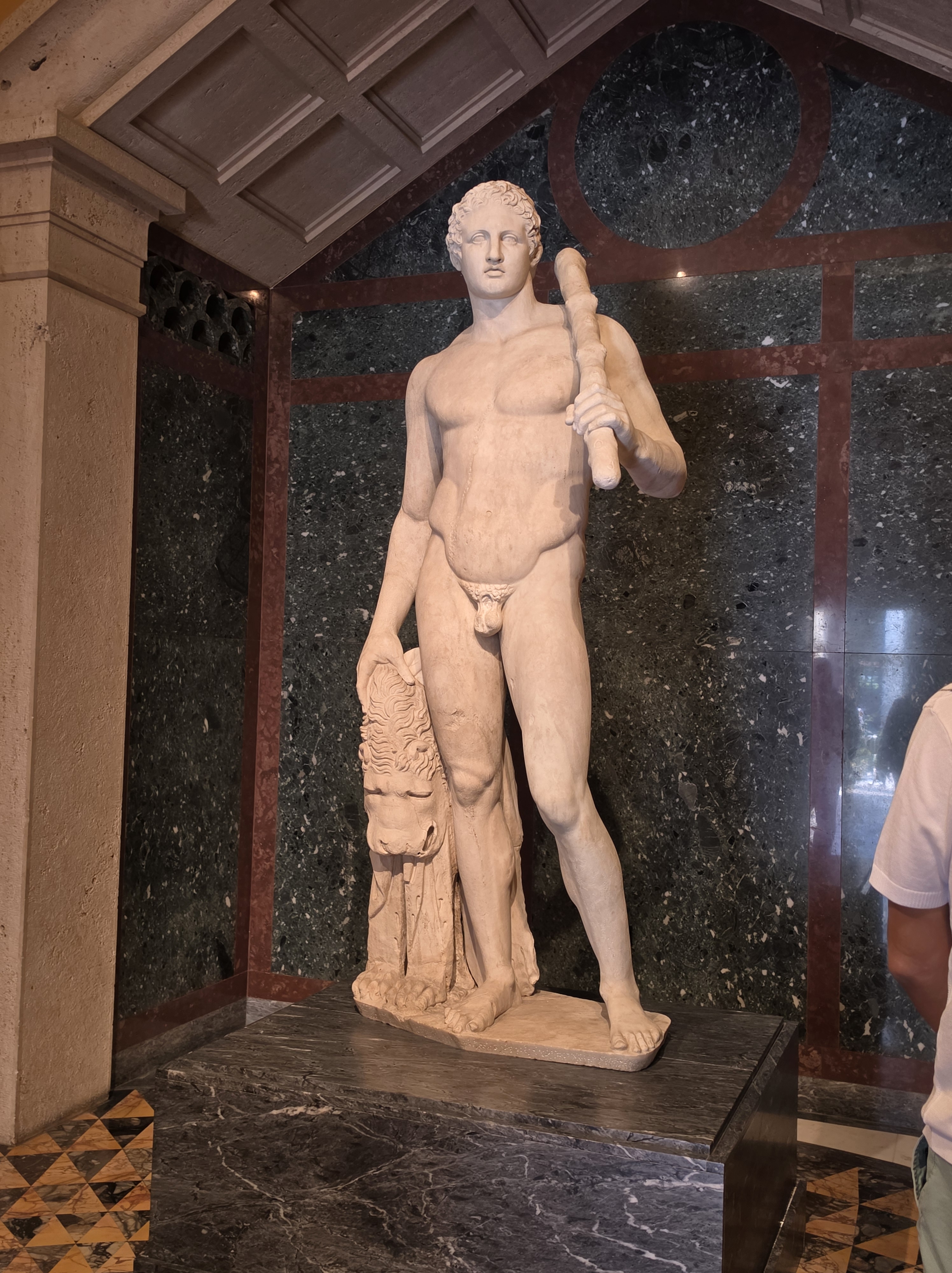
One of the key highlights of the ground floor is the Temple of Hercules. This temple is a domed room and its complex, circular, geometric patterned floor is a copy of a floor found in the Villa dei Papiri. The life-size statue of Hercules was originally discovered near Hadrian’s Villa in Tivoli. Getty purchased it from the Marquess of Lansdowne in 1952. It’s an impressive sight!
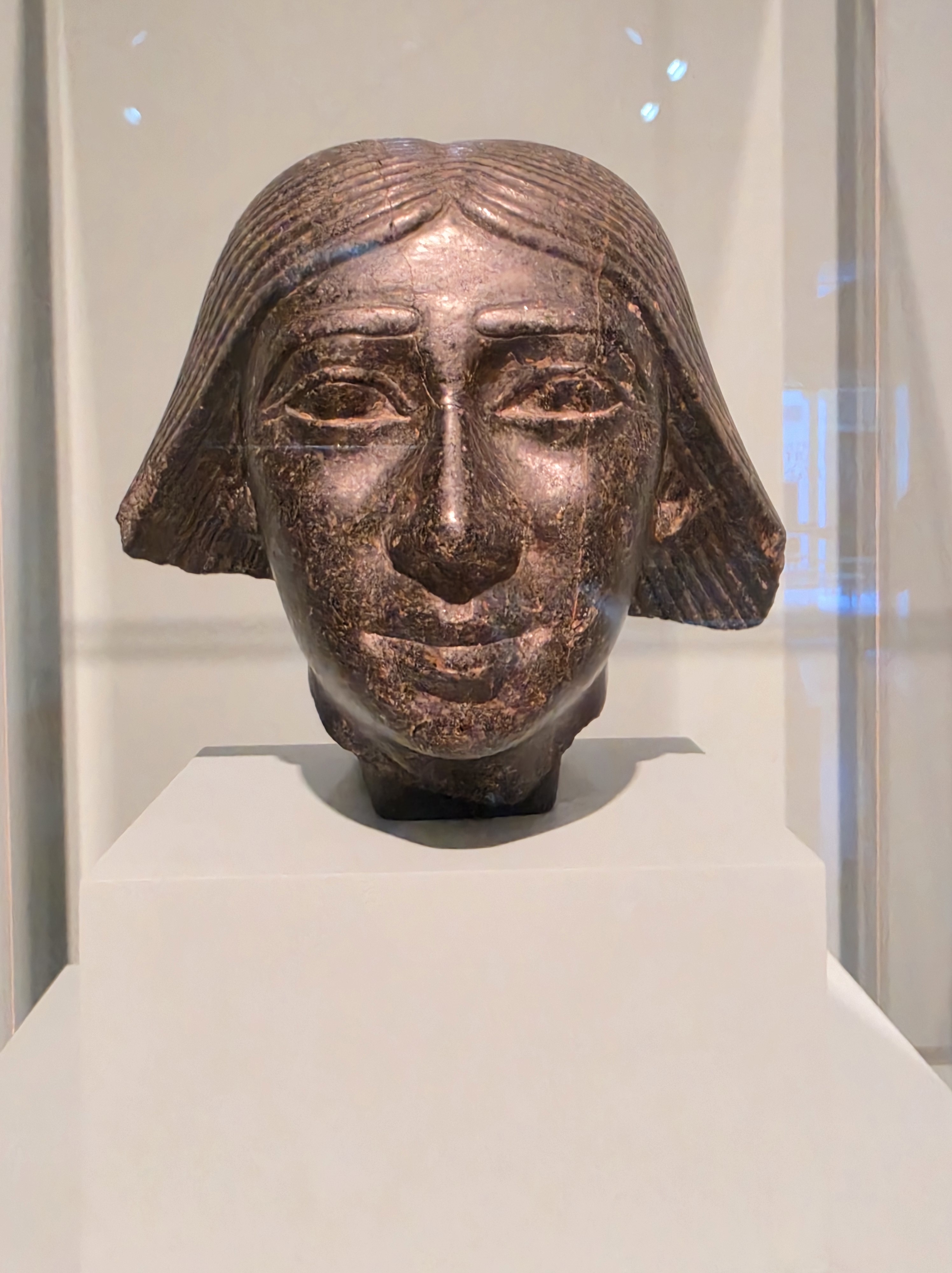
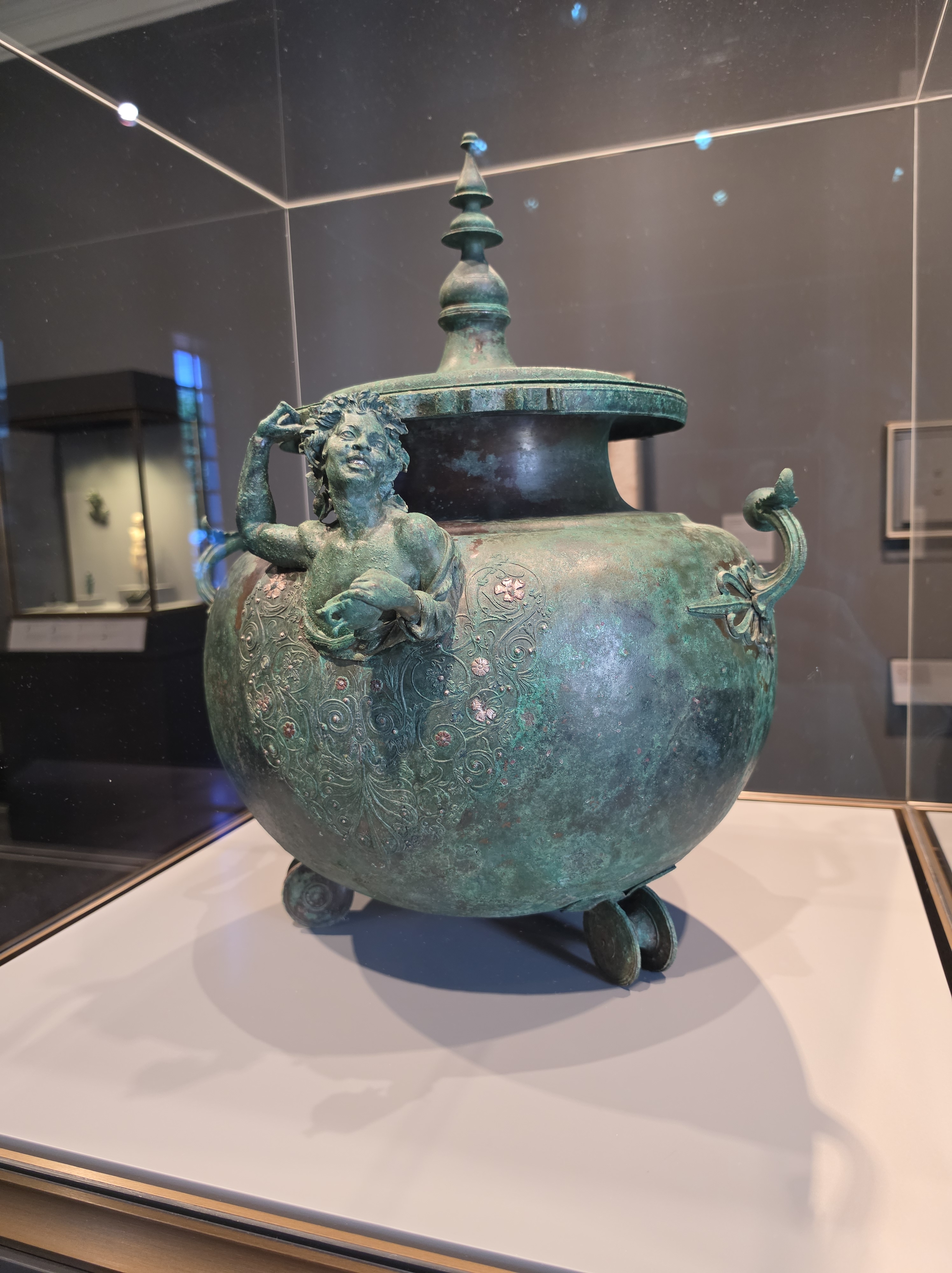
The various rooms in the villa house a magnificent and varied collection of artifacts. The faces of some of the marble sculptures are incredibly lifelike and expressive. I’m not the biggest fan of Greek pottery (it seems to fill every museum the world over!) but the examples on display in the Getty Villa are second to none.
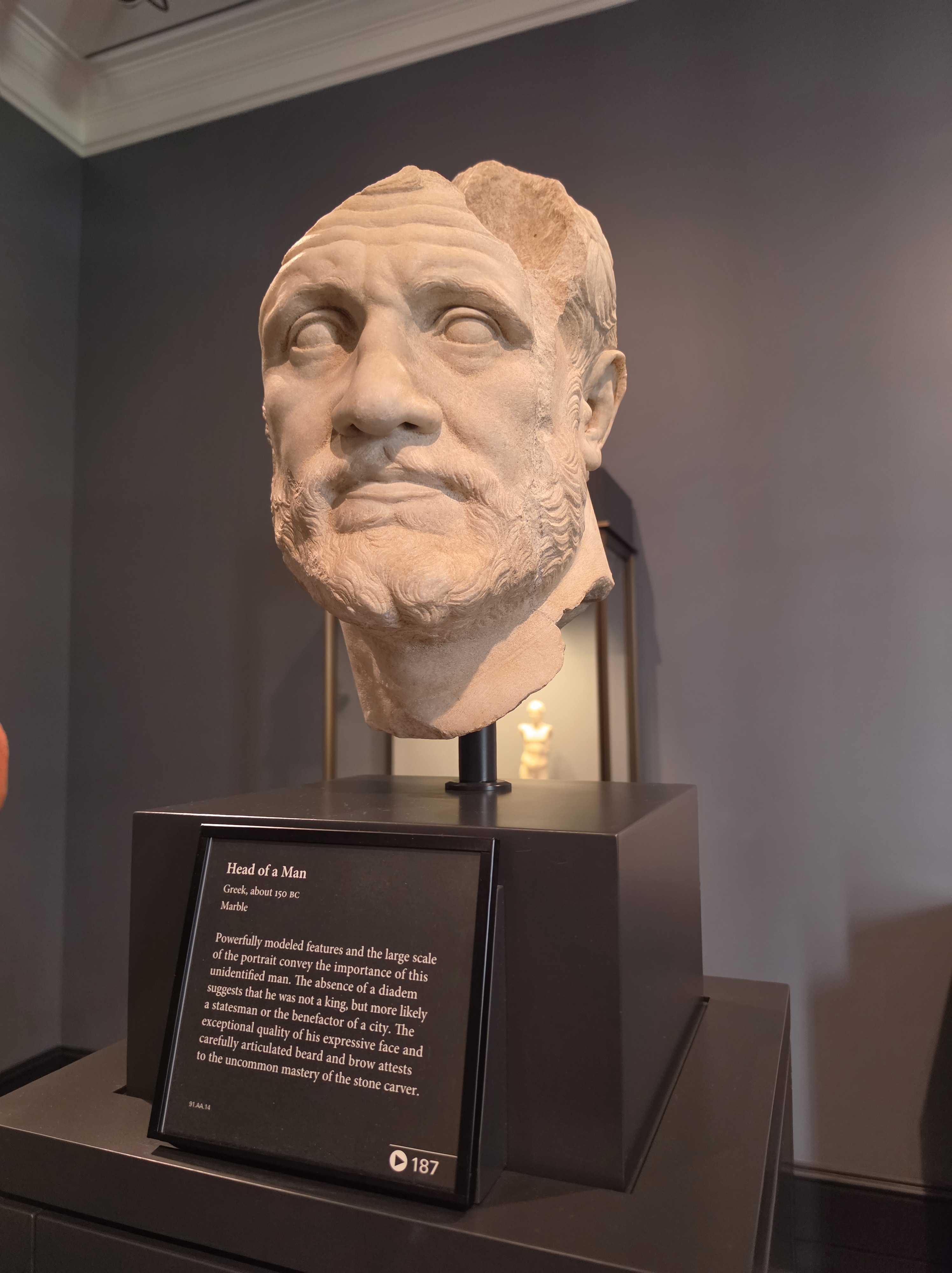
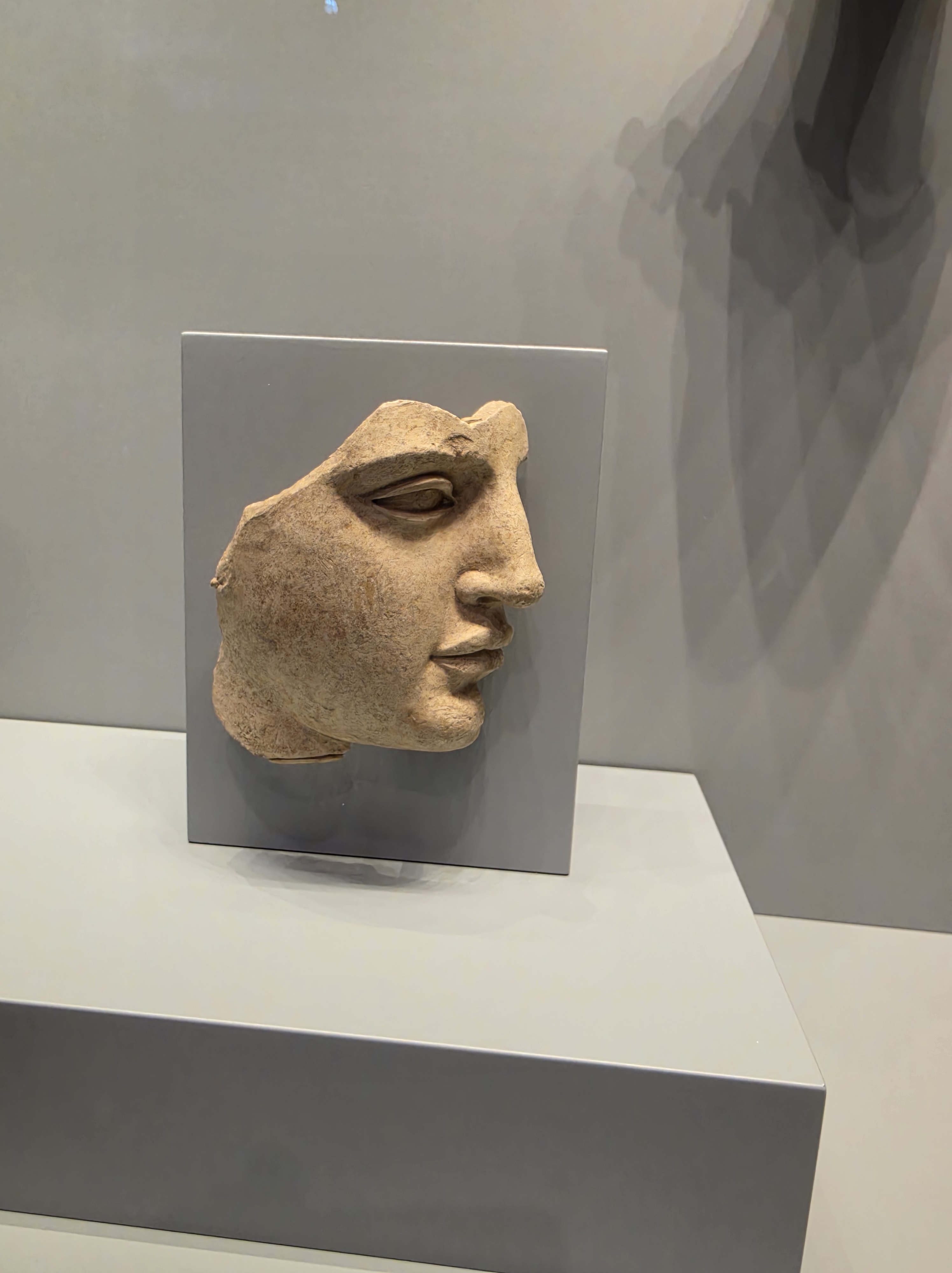
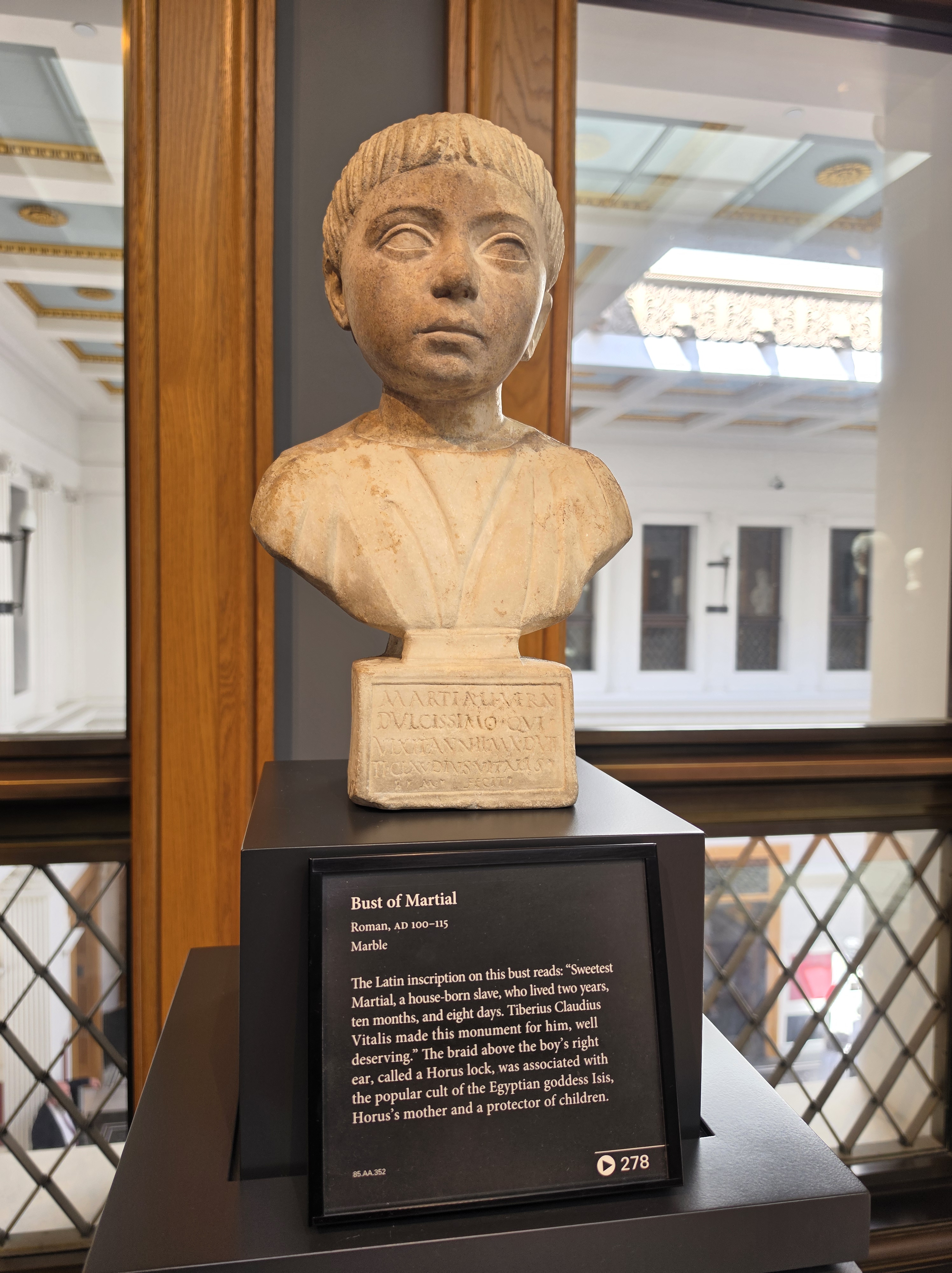
What struck me in general about many of the pieces on display throughout the villa was the level of detail that had been achieved in items that were more than two thousand years old.
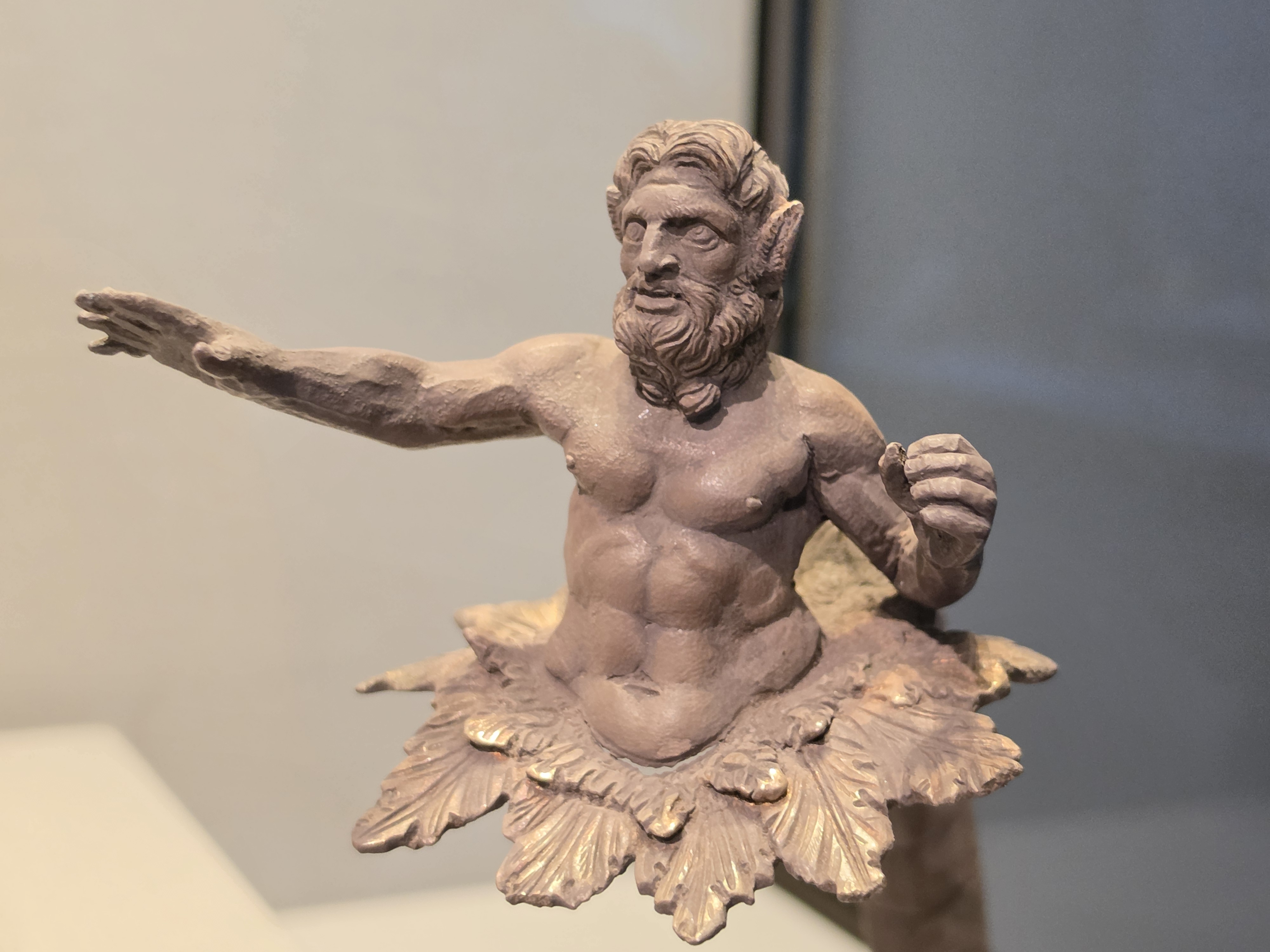
Having visited all the rooms, including a temporary exhibition on the first floor featuring an Egyptian Book of the Dead, it was time to explore the inner peristyle.
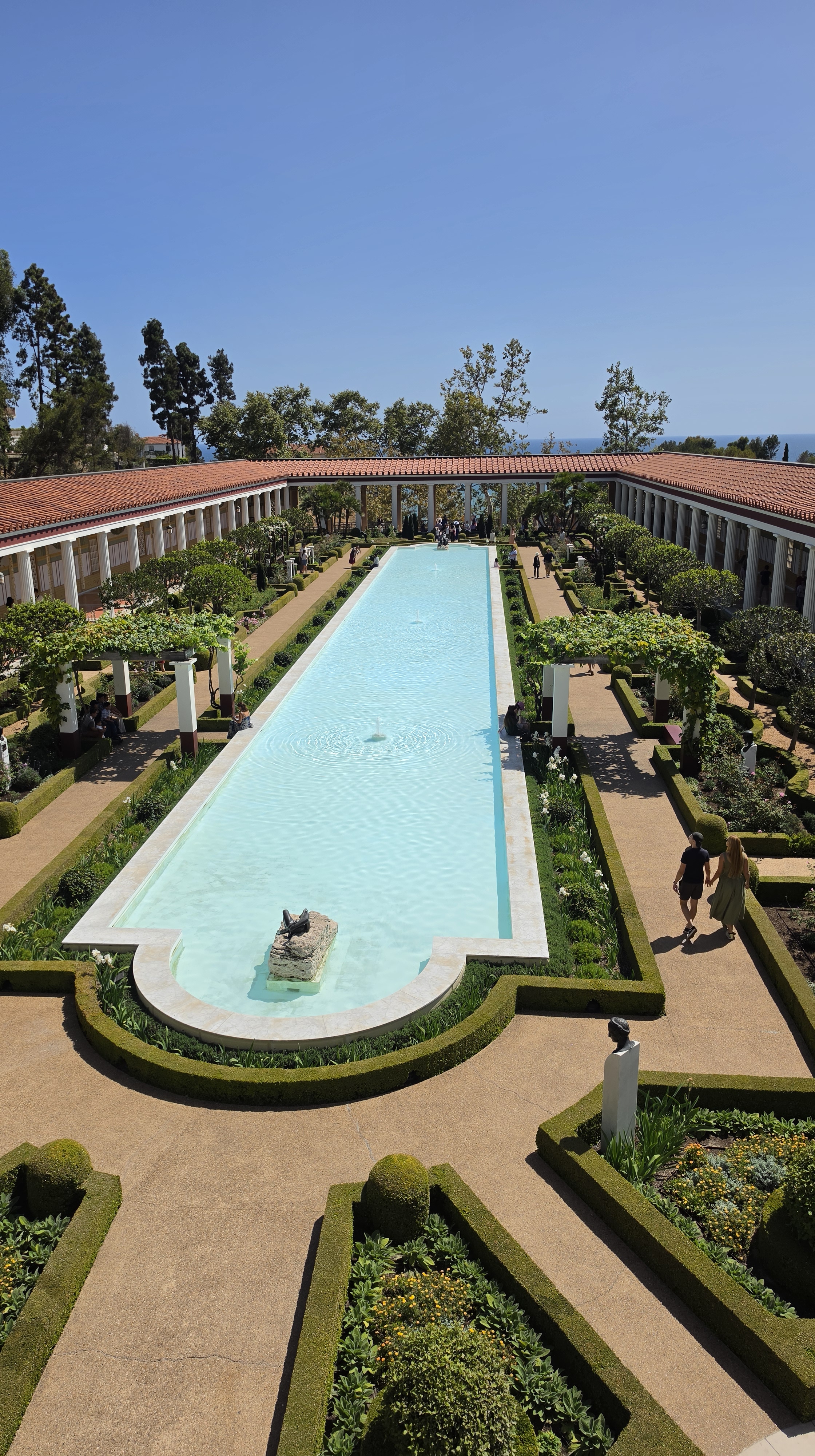
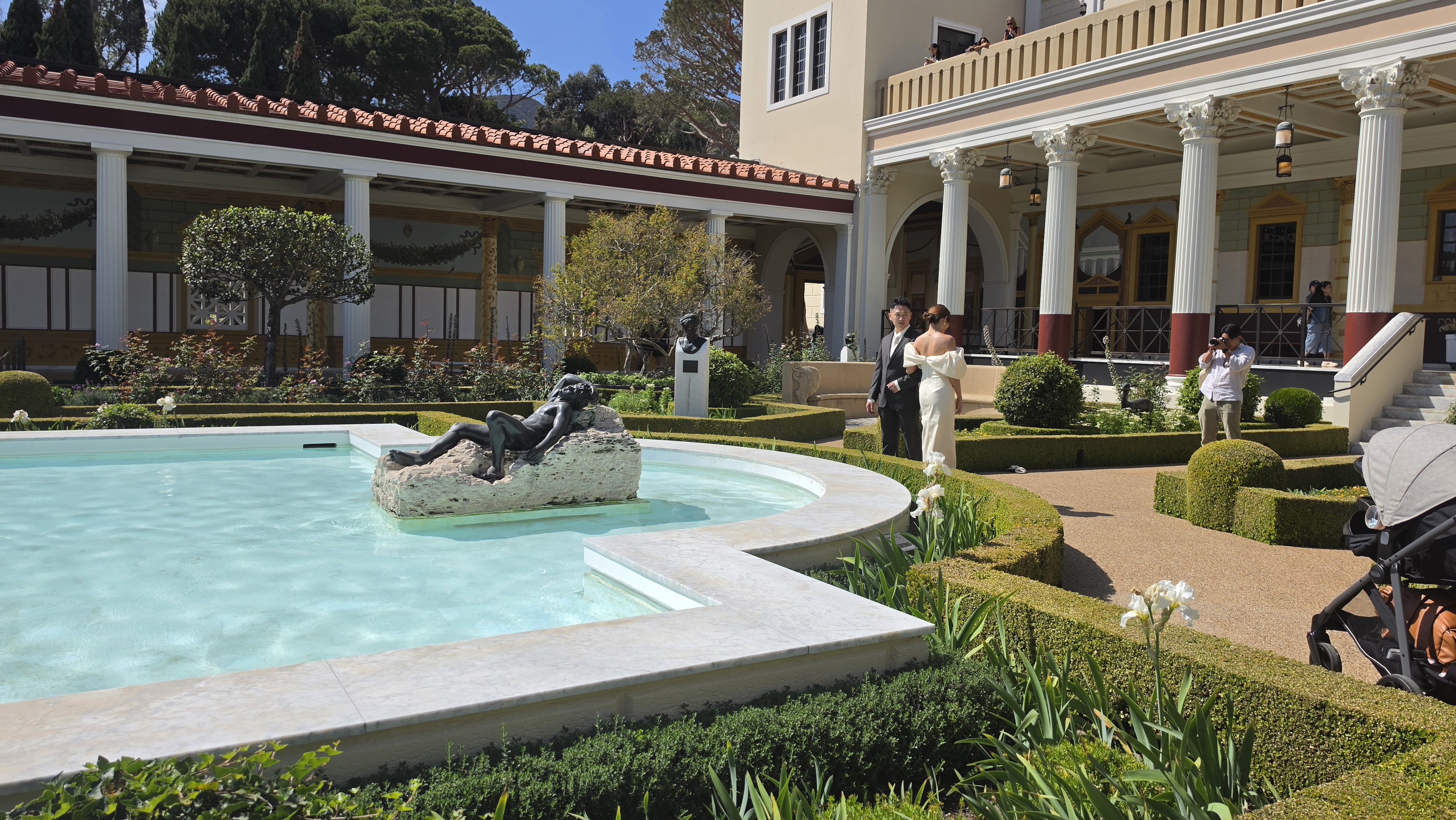
The inner peristyle is essentially a private garden surrounded by thirty-six ionic columns. It has a long narrow pool in the centre. Replicas of statues that would have adorned the peristyle of the Villa dei Papiri are sited around the gardens and pool. It is a uniquely beautiful space and it didn’t surprise me to find one newlywed couple having some of their wedding photographs taken there.
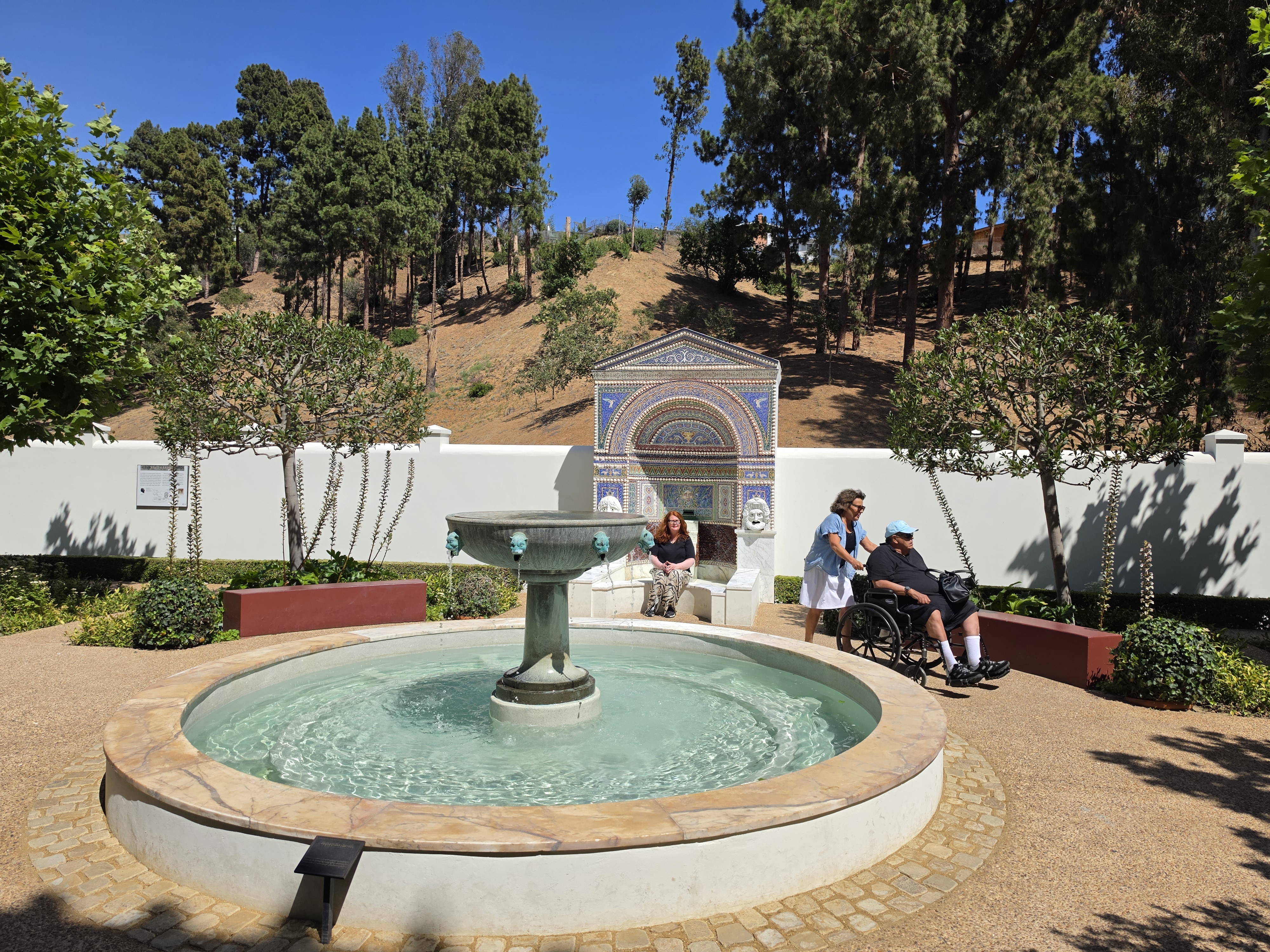
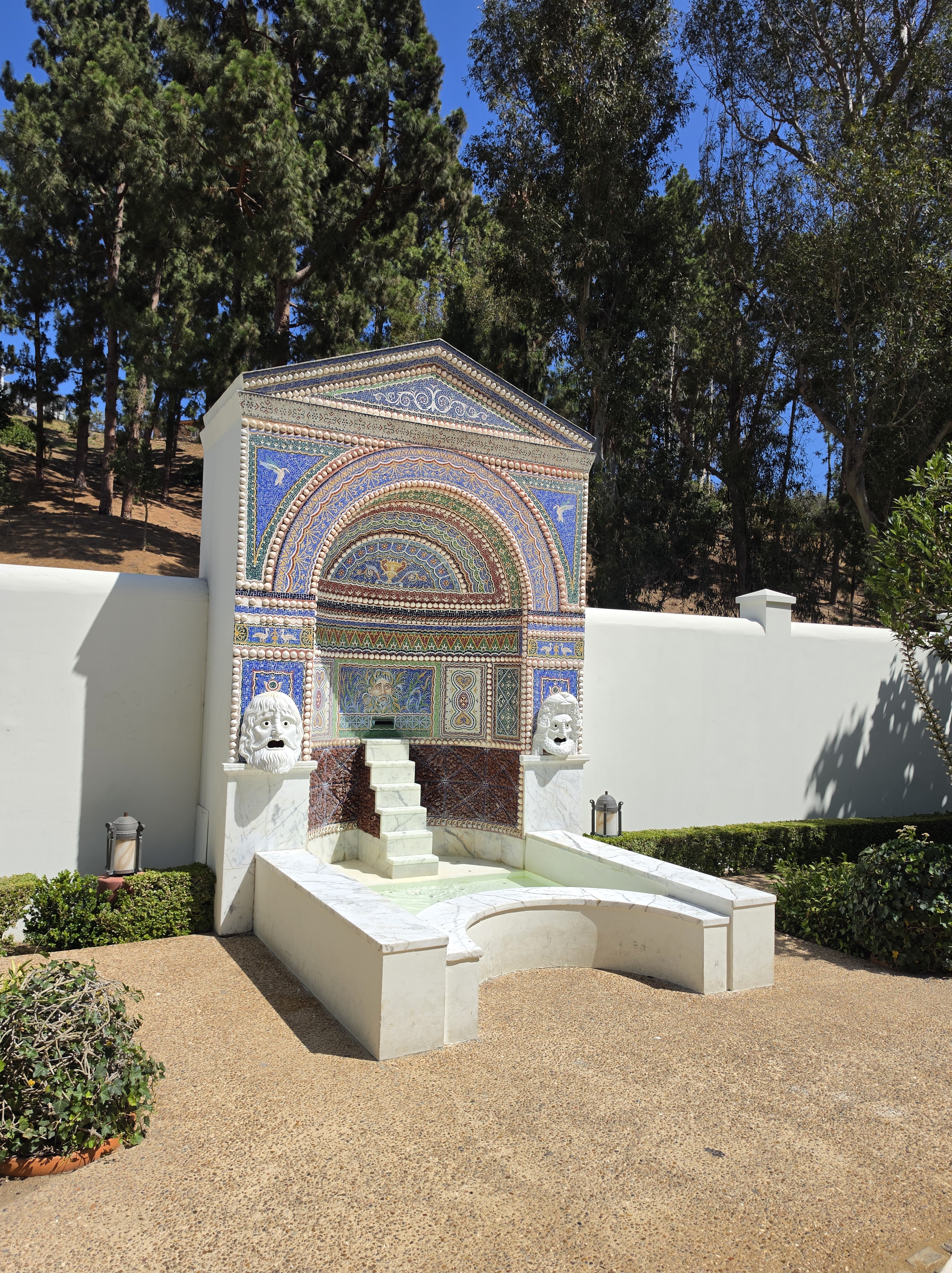
At the far end, underneath the east stair, through two bronze doors, I found one of the most peaceful areas of the villa, the East Garden. It’s a small, secluded space and in the centre is a circular fountain. Along the east wall there’s a niche fountain adorned with mosaic and shell tiles. This spectacular fountain is an exact copy of one originally discovered in the House of the Great Fountain in Pompeii, complete with two theatre masks of Hercules. Truly a special space.
The Getty Villa had one more surprise up its sleeve for me.
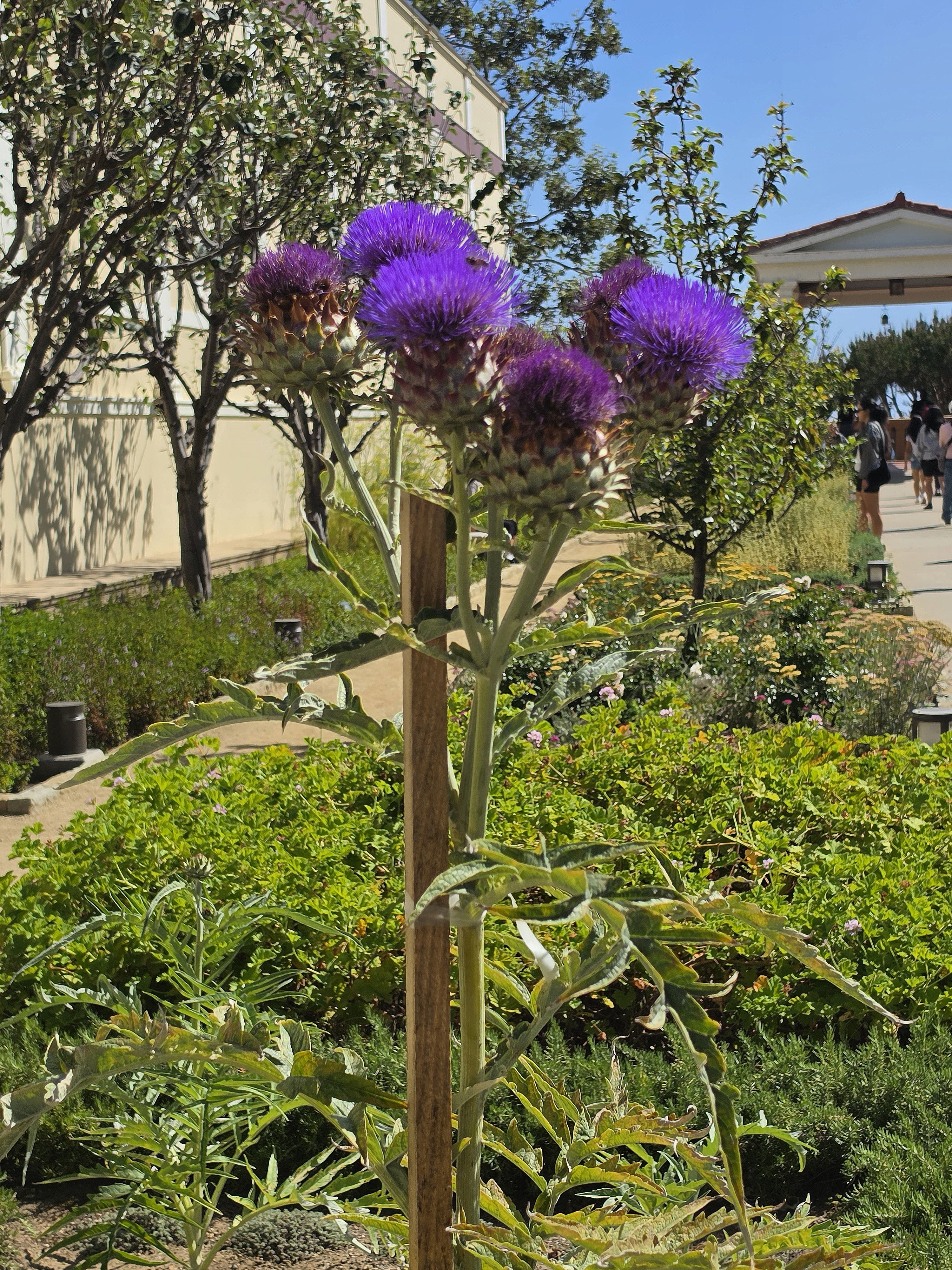
Running down one length of the villa is the Herb Garden. It’s a recreation of a Roman kitchen garden with many of the plants used for medicinal as well as culinary purposes. Imagine my surprise to find several huge Scottish thistles in one of the beds! They were the biggest thistles I have ever seen.
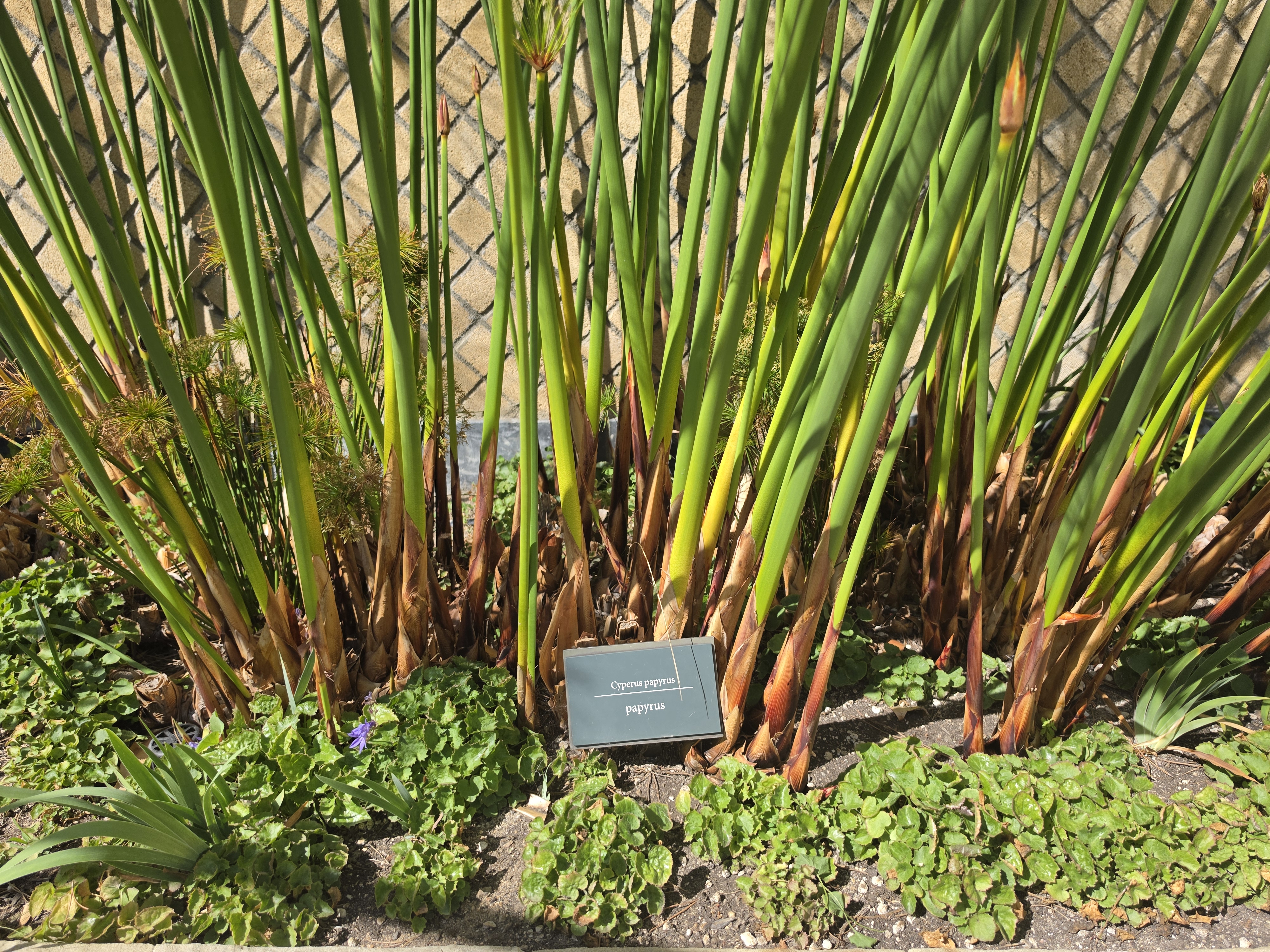
I also saw something else growing in the garden that I had never seen before- papyrus.
As I climbed back up the amphitheatre steps, I paused to take one final look back at the villa and found myself thinking back to my early Latin classes in high school (Yes, Mr Bicket, I still remember those days.)
“Caecilius est in atrium.”
Yes, he was and I could almost see him walking round in his toga, his wife, and the family dog at his side.


